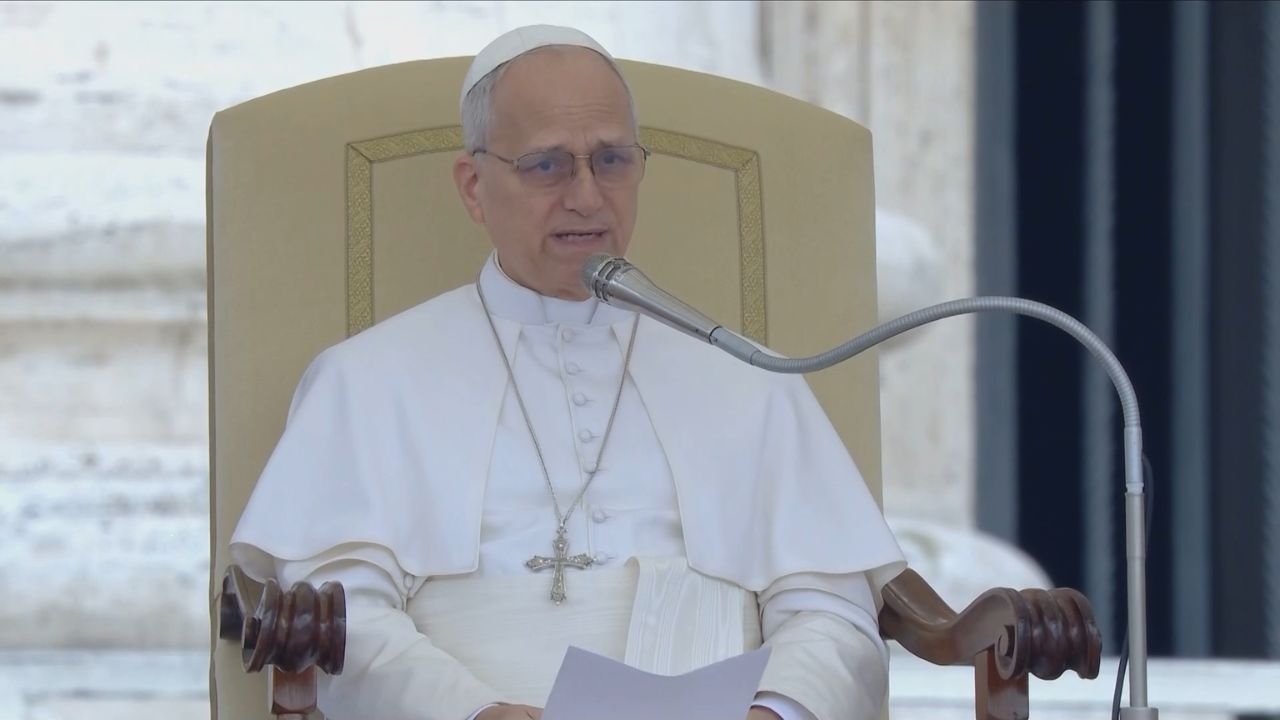
You may have already seen this incredible mosaic portraying Pope Leo XIV.
PAOLO DI BUONO
Head of the Vatican Mosaic Studio
It’s a mosaic made up of roughly 15,000 to 16,000 tiles. The tiles are made of glass material, that is, enamel. Enamel is basically glass with pigments added during the melting process, so the color is essentially sealed inside the glass. Using these materials, the mosaic was created, along with the drapery and the face of the Pontiff.
And the creation of this mosaic is simply a way of continuing this long-standing tradition:
Inside the Basilica of Saint Paul Outside the Walls, there are mosaics of every pope lining the upper wall of the entire church. In the beginning, they were simple painted portraits.
PAOLO DI BUONO
Head of the Vatican Mosaic Studio
All of this continued until the fire that almost completely destroyed the Basilica of Saint Paul in 1823. On that occasion, it was decided to restore — or rather rebuild — much of the basilica. Then, in 1847, Pope Pius IX decided that this series of papal portraits would be made in mosaic. So, in that very year, the Vatican Mosaic Studio was commissioned to begin creating all the papal portraits in mosaic.
We then step inside the Mosaic Studio of the Vatican, the place where all these mosaics—as well as many other works of art—have been created. It is a place few people know about. While it often goes unnoticed, its work is essential.
A centuries-old tradition is kept alive here. Using different historical techniques, the artisans transform molten glass into beautiful art.
PAOLO DI BUONO
Head of the Vatican Mosaic Studio
It’s the technique we call cut mosaic, the traditional method — we could say the Roman technique — where the tiles are made by cutting the material with a special hammer.
The second technique we use to make the tiles is called spun mosaic. Why “spun”? Because the tiles are actually made from rods produced by melting glass enamel.
The crafting process begins by melting the glass at this furnace you see. The material is heated on the surface until it reaches extremely high temperatures.
Once the small pieces reach a liquid state, softened enough to mold, they are shaped and slowly cooled, then stretched out on a table and cut in a way that’s actually much simpler than you might think.
With this small file, the piece is marked and then cut by hand, giving the craftsman a clear idea of how everything will fit together in the final work of art.
But the process doesn’t end here. To secure the tiles, the studio uses a special mixture based on a secret recipe that likely dates back to the 16th century.
PAOLO DI BUONO
Head of the Vatican Mosaic Studio
So, this is the special stucco used by the Vatican Mosaic Studio to fix the tiles. It’s a stucco with a very old recipe, probably from the 16th century, made with marble dust and linseed oil. In fact, it’s a recipe that we still use today to make the mosaic.
Each tile is placed in ways that form patterns which combine color, light, and proportion. The gold ones, for example, have three layers: a glass base, a sheet of real gold, and another thin layer of glass on top.
PAOLO DI BUONO
Head of the Vatican Mosaic Studio
So, you could say it’s a kind of sandwich structure. The gold — the sheet of gold placed between the two layers of glass and real gold — is what makes the gold tesserae shine so brightly.
Tucked away in the corners of the Vatican, this small workshop holds centuries of beautiful history and tradition.