Life in the Holy Land has changed profoundly. Extensive conflict throughout the Middle East and regular missile attacks have altered the daily routine of its inhabitants. Religious observance in many of the sacred places is currently suspended, creating tension between security and faith.
The Magdala Center by the Sea of Galilee is a Catholic center for pilgrims and is dedicated to prayer and spiritual formation for Christians.
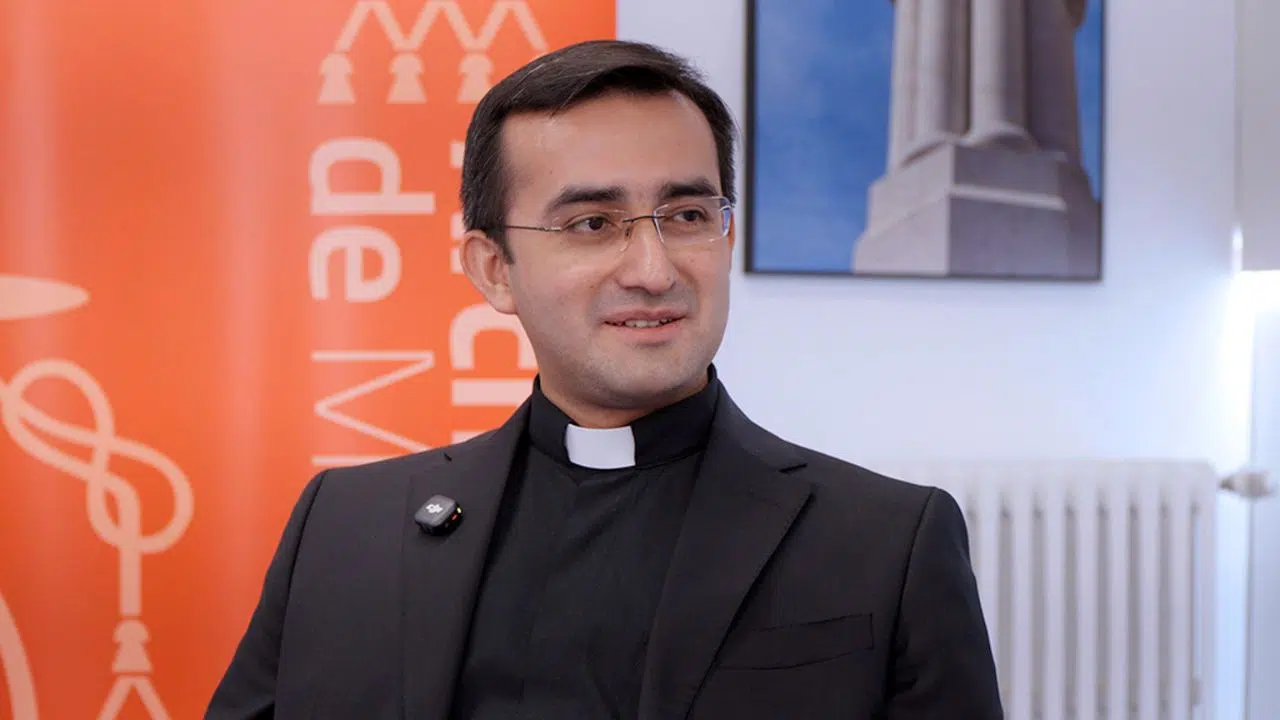
At the head of the center is Father Juan María Solana, a Legionary of Christ, who describes firsthand experiences of the ongoing situation in the Holy Land.
FATHER JUAN MARÍA SOLANA
Director, Magdala Center
Now we are concerned, and every time there is an alert, you either go into shelters or carefully look at the sky before going outside because something could fall on your head. So, let’s say we feel safe because an alert arrives on the phone whenever there is a missile risk—it tells you that you have 10 minutes to find shelter. So you look for it, and then they confirm the alert or a siren goes off warning that a missile is already on its way to your city.
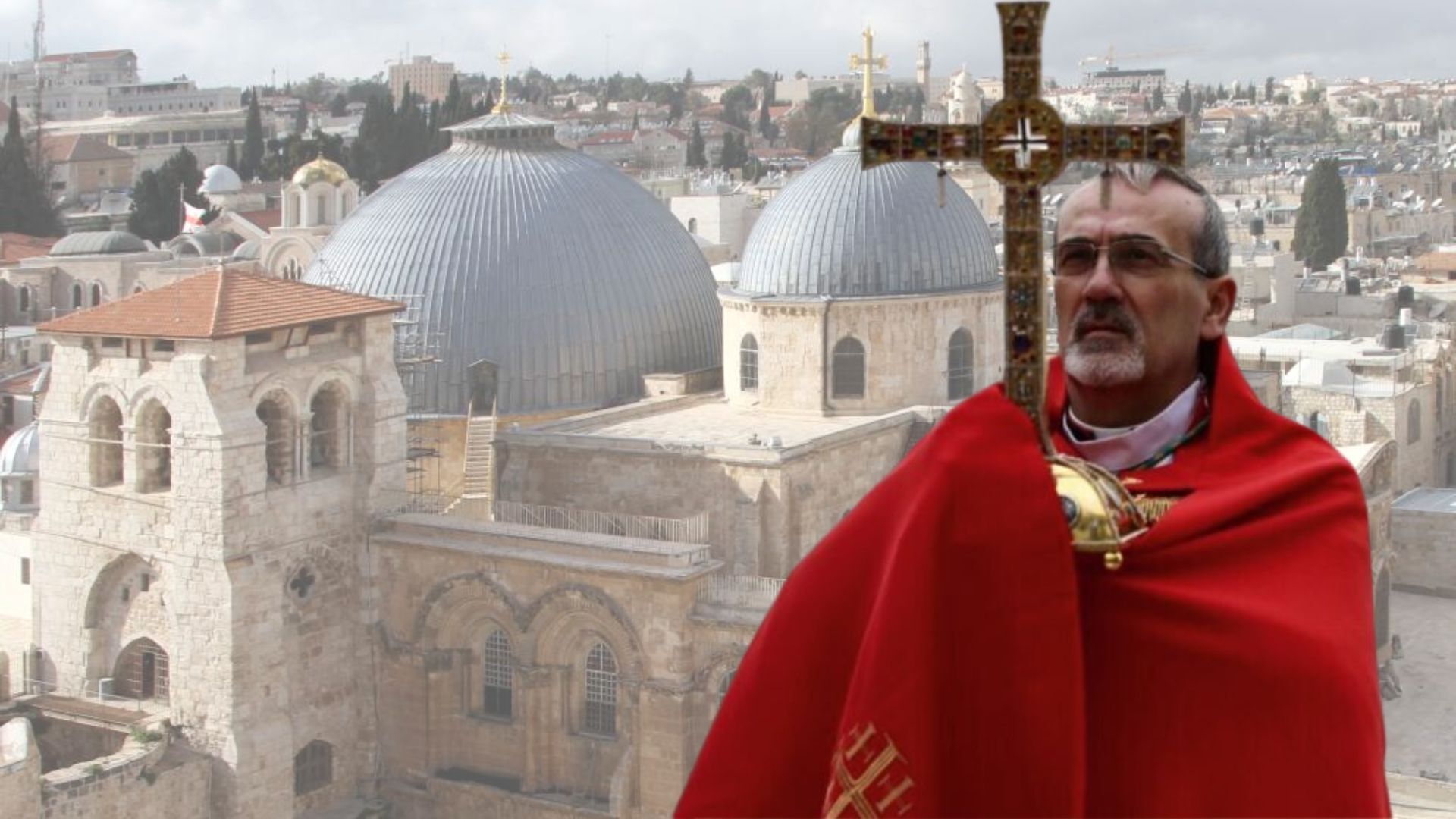
Protection is not the same everywhere, however—for example, the Old City of Jerusalem, the spiritual center of Christianity and Judaism, and important to Islam, lacks modern shelters, which has forced authorities to close businesses and to limit access to most, if not all, of the sacred sites.
FATHER JUAN MARÍA SOLANA
Director, Magdala Center
If a missile were to fall in the Old City of Jerusalem, it could cause tremendous devastation and kill many people. That is why there has been great alarm and some confusion surrounding the Old City, which led the government not to authorize access to the holy places. As far as I know, all the holy sites—Muslim, Jewish, and Christian—in the Old City are closed.
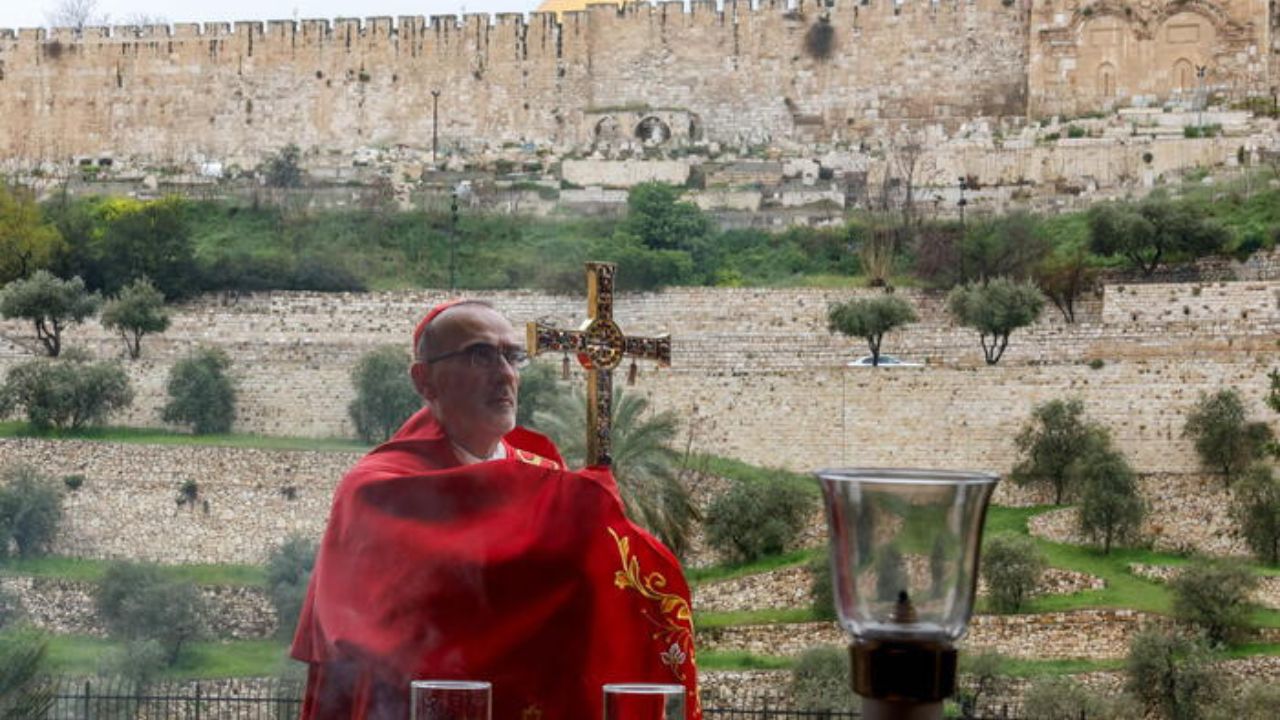
This situation directly affected Holy Week celebrations. The Latin Patriarch of Jerusalem and the Custos of the Holy Land were unable to access the Holy Sepulchre on Palm Sunday. Father Juan María explains what happened:
FATHER JUAN MARÍA SOLANA
Director, Magdala Center
It is somewhat inexplicable for three reasons. First, because both live in the Old City and, as residents, they would have the right to enter it. Second, because they were going alone. It was not a demonstration or anything in the street—they were going to the Holy Sepulchre. And third, because both have a direct and immediate connection with the Holy Sepulchre, where the Palm Sunday Mass was to be celebrated in a rather private way.So, I think it was an exaggerated interpretation of the rule.
Despite this, religious observance did not stop altogether: the Franciscan friars who live inside the Holy Sepulchre celebrated the Palm Sunday Mass, while Patriarch Pizzaballa celebrated it b the Garden of Gethsemane.
Even so, Father Solana acknowledges that the balance between security and religious practice is delicate:
FATHER JUAN MARÍA SOLANA
Director, Magdala Center
While celebrating a Mass or a rosary, we might say, “We’ll be back in five minutes,” and go to the shelter. Or, as we are doing now, we celebrate Mass and broadcast it from a shelter. We hold it there, we have adoration there—precisely to avoid unnecessary movement and alerts. So, I believe the State has the right and the duty to safeguard the physical integrity of all inhabitants, regardless of religion, age, occupation, etc.
Father Juan explains that the tense scenario must also be seen through the lens of faith, which , in his case, helps him endure fear.
FATHER JUAN MARÍA SOLANA
Director, Magdala Center
And when you hear one of those explosions, it does frighten you because they are tremendous bombs—very destructive. If one falls on your head, you can’t even imagine it. So yes, you have to be cautious; you have to live cautiously. You have to live in the grace of God.
Finally, the war has also completely interrupted pilgrimages to the Holy Land. Tel Aviv’s airport has remained almost entirely closed since the end of February, and the few travelers who want to enter the Levant region must do so by road from Jordan or Egypt. As a result, virtually no pilgrims are reaching the country. In 2017 the Magdala Center received 135,000 visitors, for example—as of now, they receive none.
FATHER JUAN MARÍA SOLANA
Director, Magdala Center
From February 28 until today, absolutely no one has come, nor do we expect anyone to come until this war ends and we begin to see more clearly when pilgrimages can resume. I don’t think there are more than 10 pilgrims in Israel right now. I doubt there are more than 10. And those 10 are either very bold or very reckless—I’m not sure which.
Despite the large spike in regional conflict and missile attacks, life in the Holy Land continues. Masses are celebrated, friars and priests continue ministering to the faithful. And although pilgrimages and tourism have almost completely died, faith remains alive through the religious practice and prayer of those there.