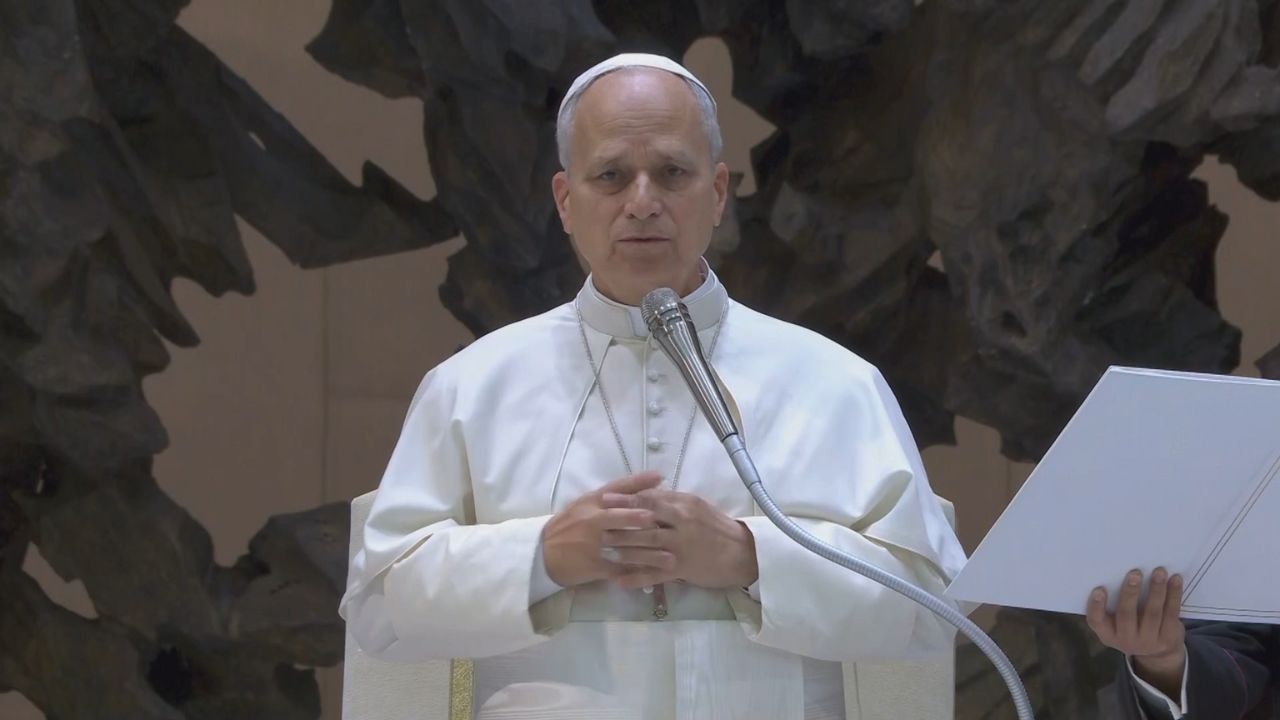
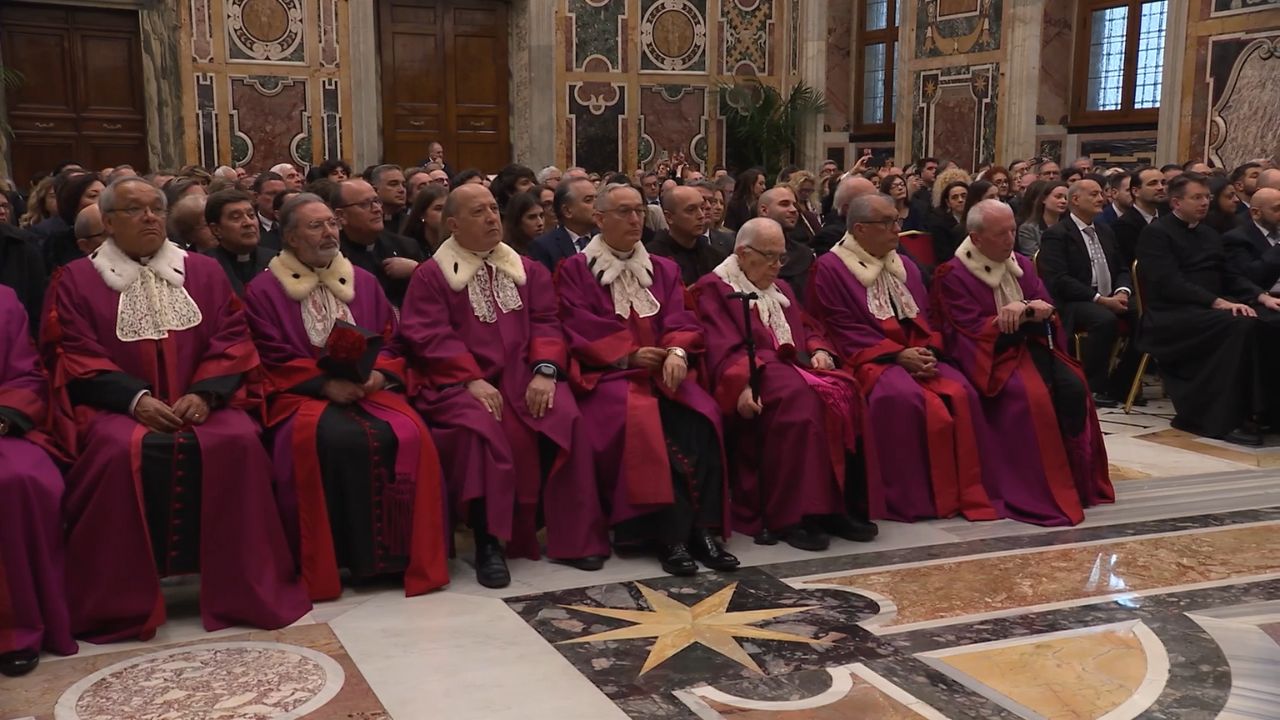
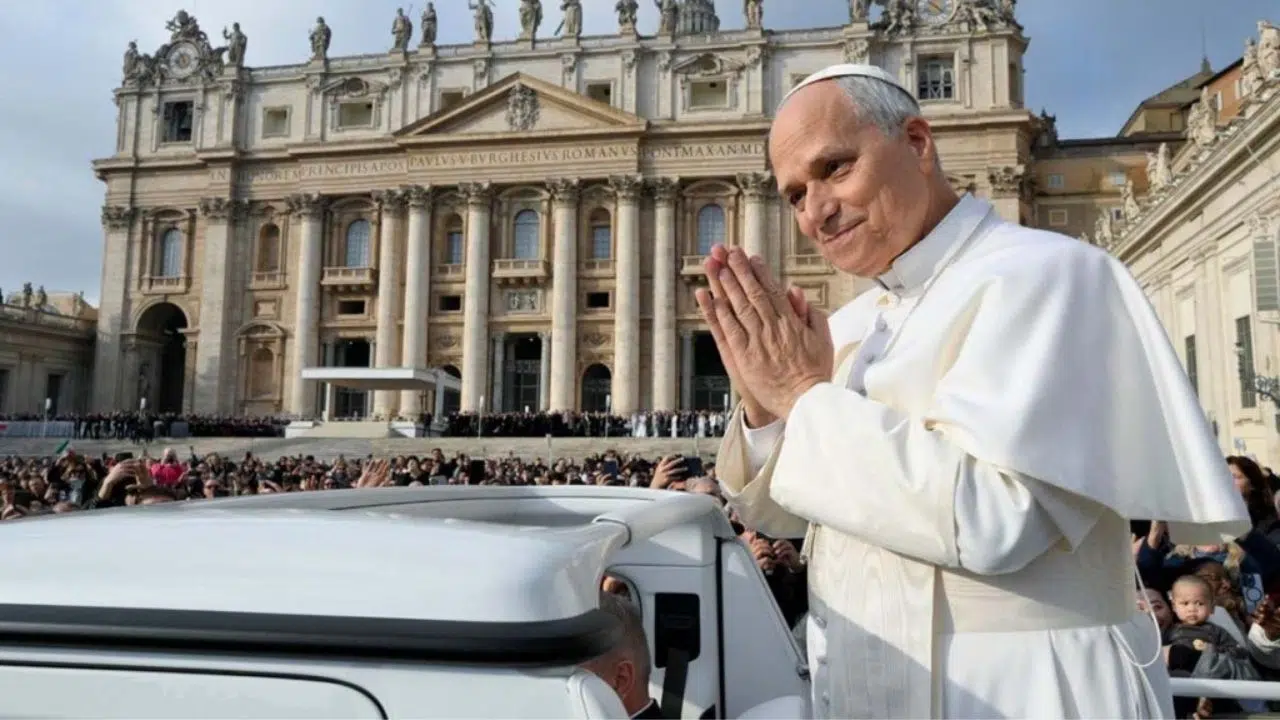
Pope Leo presided over the weekly General Audience in the Paul VI Hall on the morning of the feast of St. Thomas Aquinas, one of the most influential Saints and Doctors of the Catholic Church.
POPE LEO XIV
May Saint Thomas Aquinas, Doctor of the Church, whose memorial we celebrate today, guide us in understanding the Scriptures, which he commented on with such wisdom, so that we may understand how much God loves us and desires our salvation.
The Pontiff continued his catechesis on Dei Verbum, one of the foundational documents of Vatican II which explains the relationship between God and humanity. This time, he focused on how that relationship is shaped through Sacred Scripture.
POPE LEO XIV
The Word of God, therefore, is not fossilized, but is a living and organic reality that develops and grows within Tradition. The latter, thanks to the Holy Spirit, understands it in the richness of its truth and embodies it within the changing coordinates of history.
The day prior to the audience was International Holocaust Remembrance Day, January 27, which commemorates the liberation of the Auschwitz concentration camp.
The day pays tribute to the six million Jews and millions of other victims murdered under Nazism. Honoring the memory of the victims, Pope Leo called for an end to antisemitism and hatred.
POPE LEO XIV
Yesterday marked the International Day of Commemoration in memory of the victims of the Holocaust, which caused the deaths of millions of Jews and numerous other people. On this annual occasion of painful remembrance, I ask the Almighty for the gift of a world with no more antisemitism and no more prejudice, pressure, or persecution against any human being.
It is a message he conveyed the day before while leaving Castel Gandolfo, at the entrance to Villa Barberini. The Pope also took the opportunity to issue a renewed appeal for peace in the Middle East and throughout the entire world.