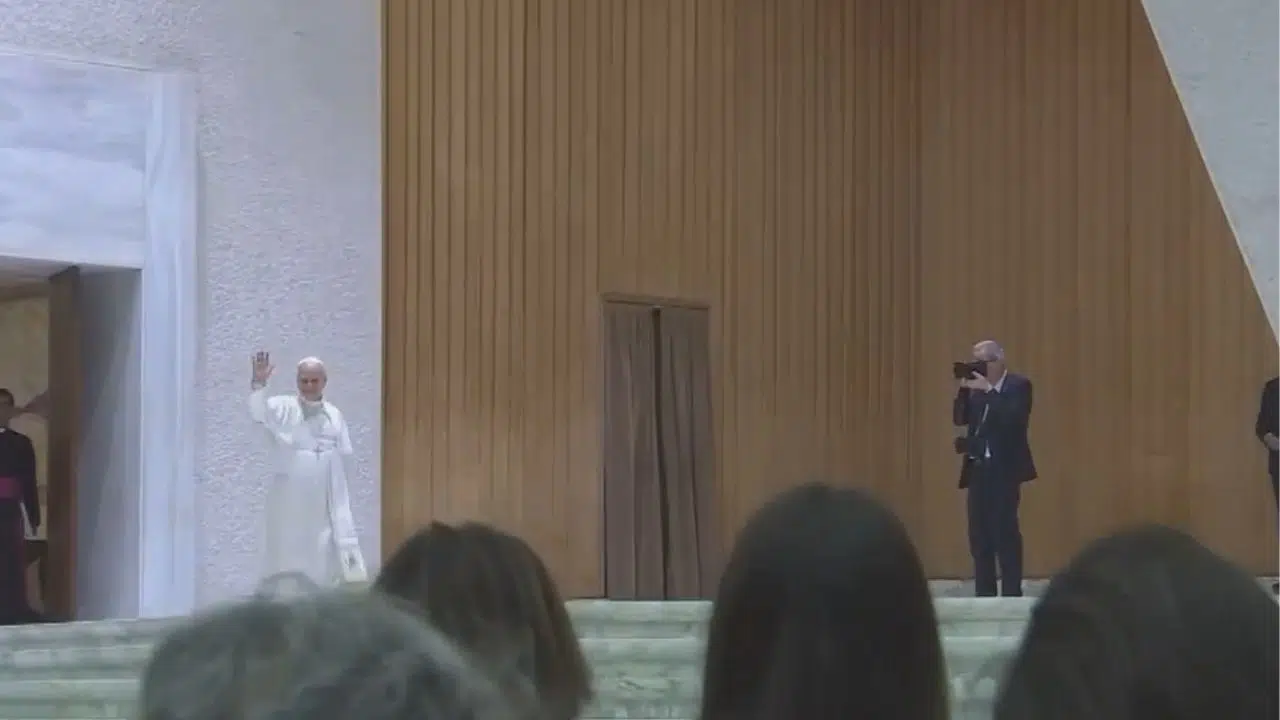
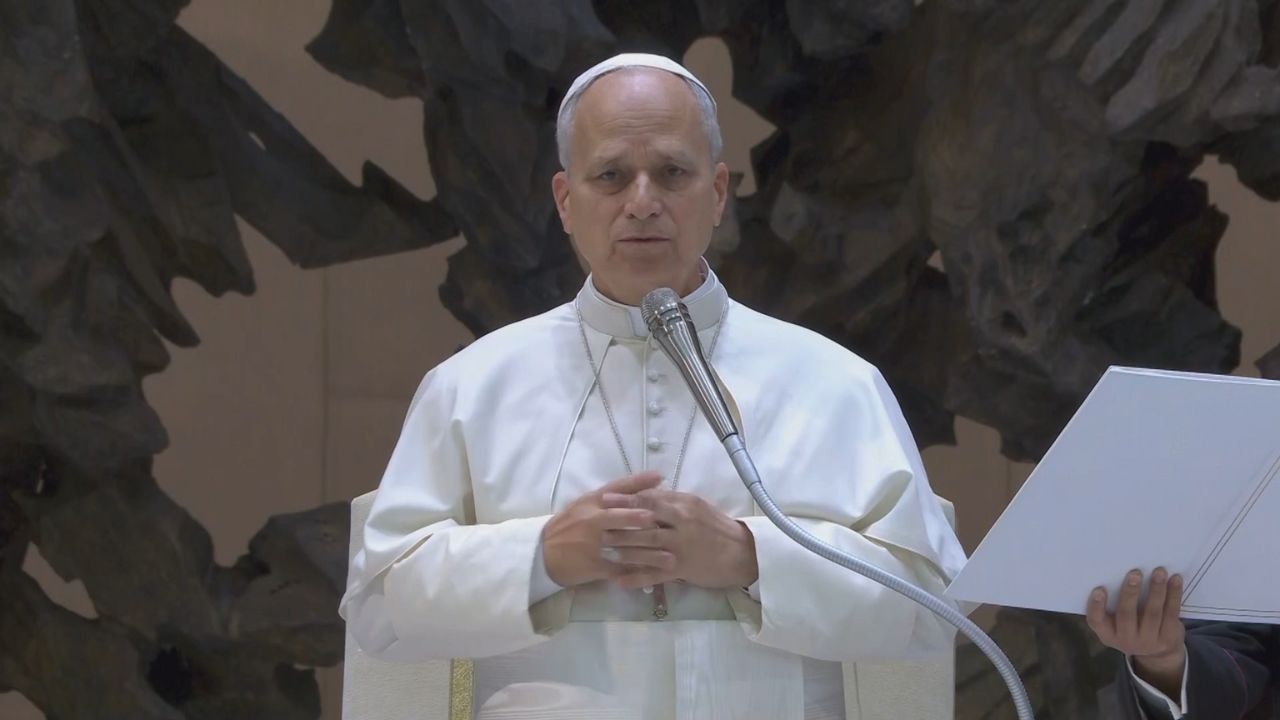
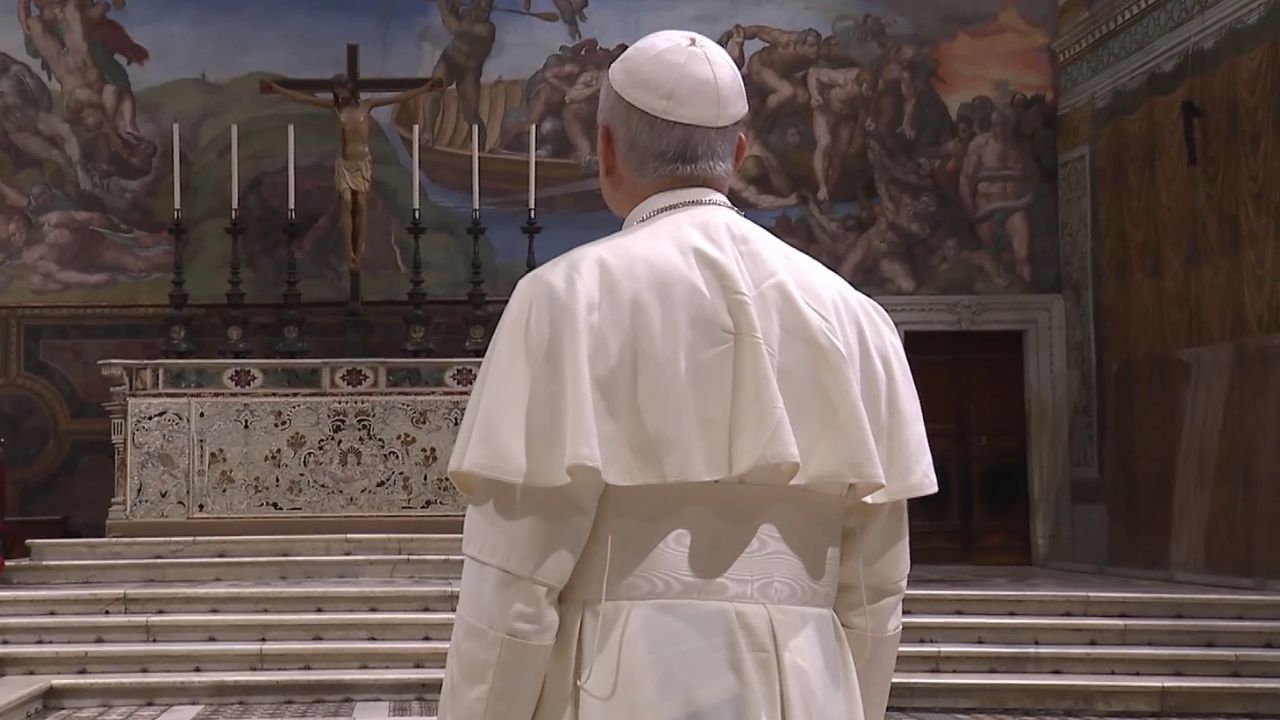
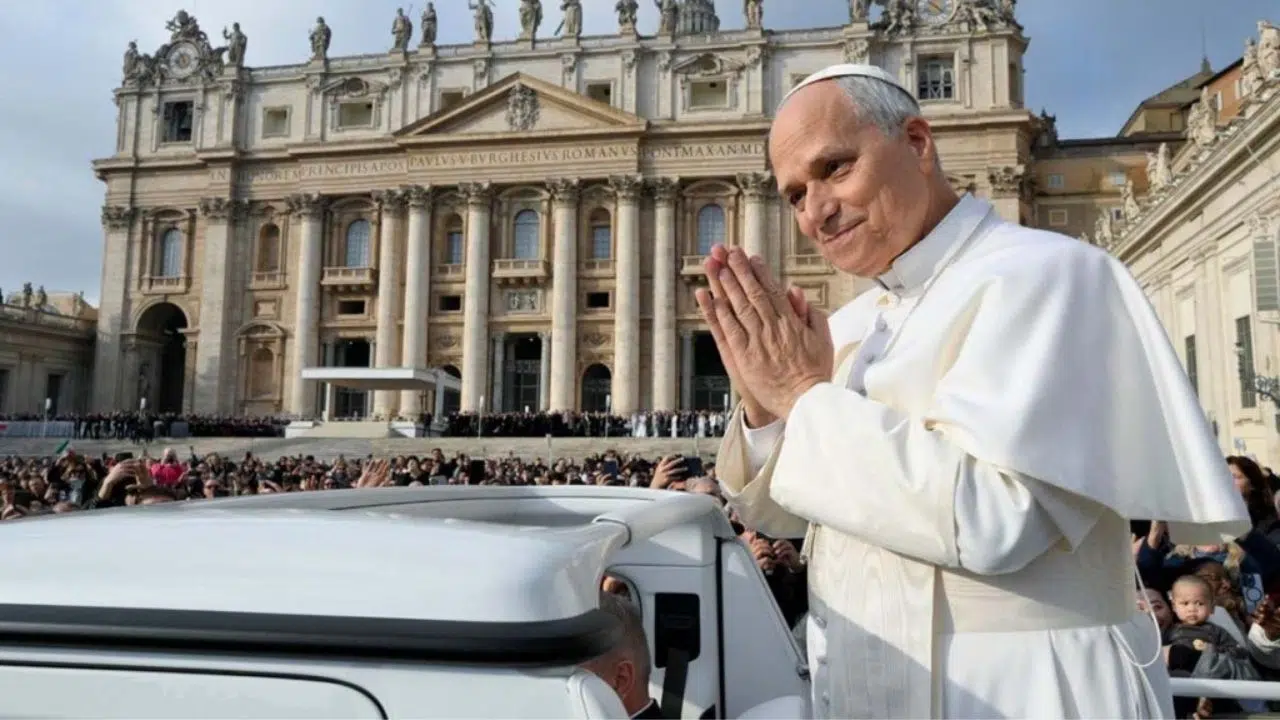
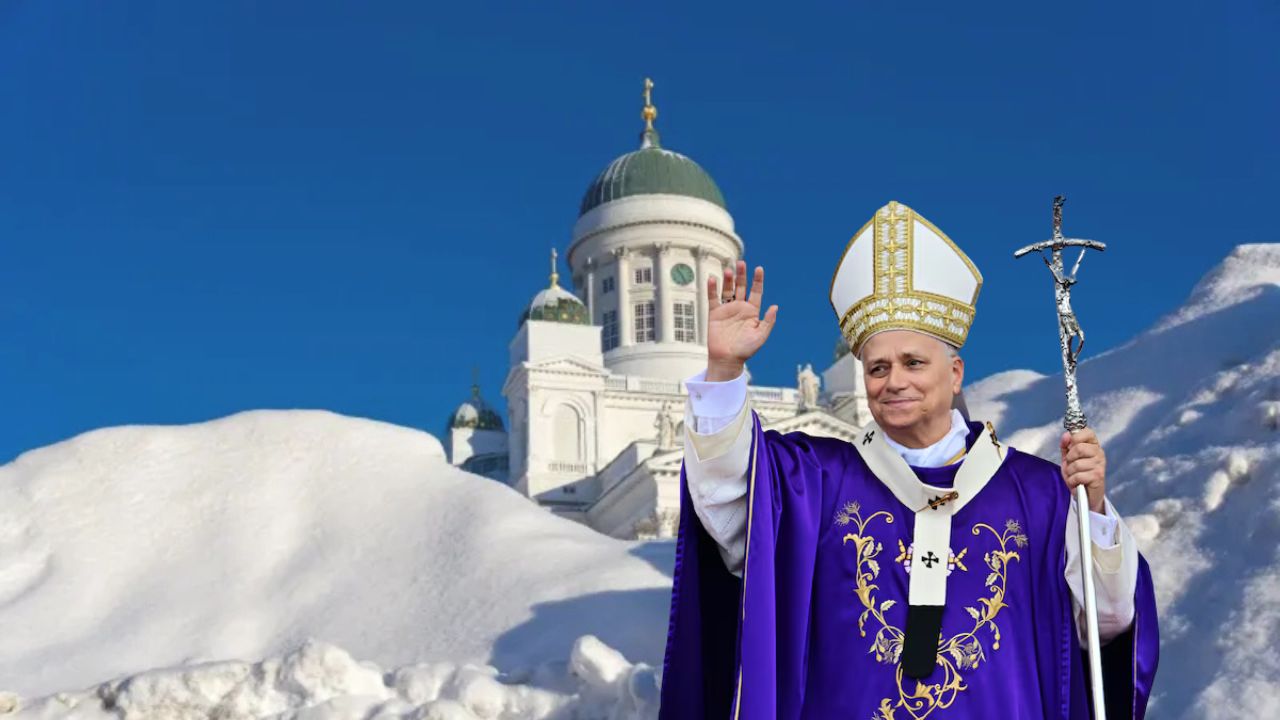
The white zucchetto is one of the defining features of papal attire.
The Pontiff rarely removes it… However, take a look at what’s about to happen…
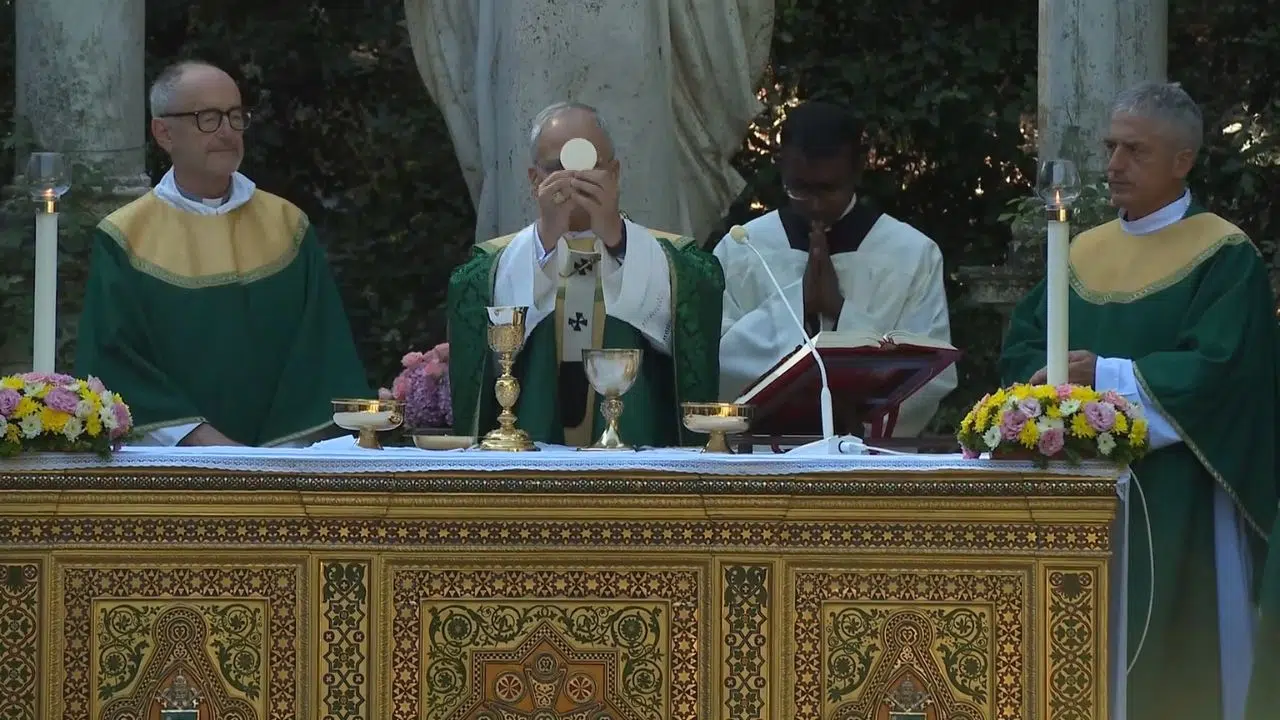
This happens in every Eucharistic celebration. At the moment of the prayer, the Pope is seen with his head uncovered—without the zucchetto.
However, this gesture doesn’t only happen during Mass. It also takes place at another moment: during Eucharistic adoration.
But what does it mean?
RAMÓN NAVARRO
Director, Episcopal Commission for the Liturgy (CEE)
The zucchetto, as its name suggests, “soli Deo” (for God alone) is removed only before God. The Pope and bishops always keep their heads covered, except during the Eucharistic prayer, out of reverence for the real presence of Christ. Only before God, only before the sacramental presence of Christ in the Eucharistic species, is it removed.
It was around the 15th century that this liturgical ornament began to be used. It also comes in different colors according to ecclesiastical rank: white for the Pope, purple for bishops, and red for cardinals.
The earlier version was called the camauro. This is what you're seeing on screen now...
RAMÓN NAVARRO
Director, Episcopal Commission for the Liturgy (CEE)
There used to be other versions, like a type of cap, also much larger, made of red velvet.
And those images are of Pope John XXIII. In fact, if you visit St. Peter’s Basilica, where his body lies for veneration, you’ll see him wearing it.
But he's not the only exception. Pope Benedict XVI also wore it in December 2005 to cope with Rome’s cold temperatures.
But going back to the zucchetto, the rules about when to take it off or put it on aren’t strict formulas. There are situations that go beyond theory. Like everything in life—unexpected moments happen...
AM
Trans. CRT