The Virgin Mary was conceived without original sin. This is the dogma of faith that Pope Pius IX proclaimed in 1854, and it came with a lot of controversy. Critics argued that it did not explicitly appear in the Bible and that it fueled division between Christians.
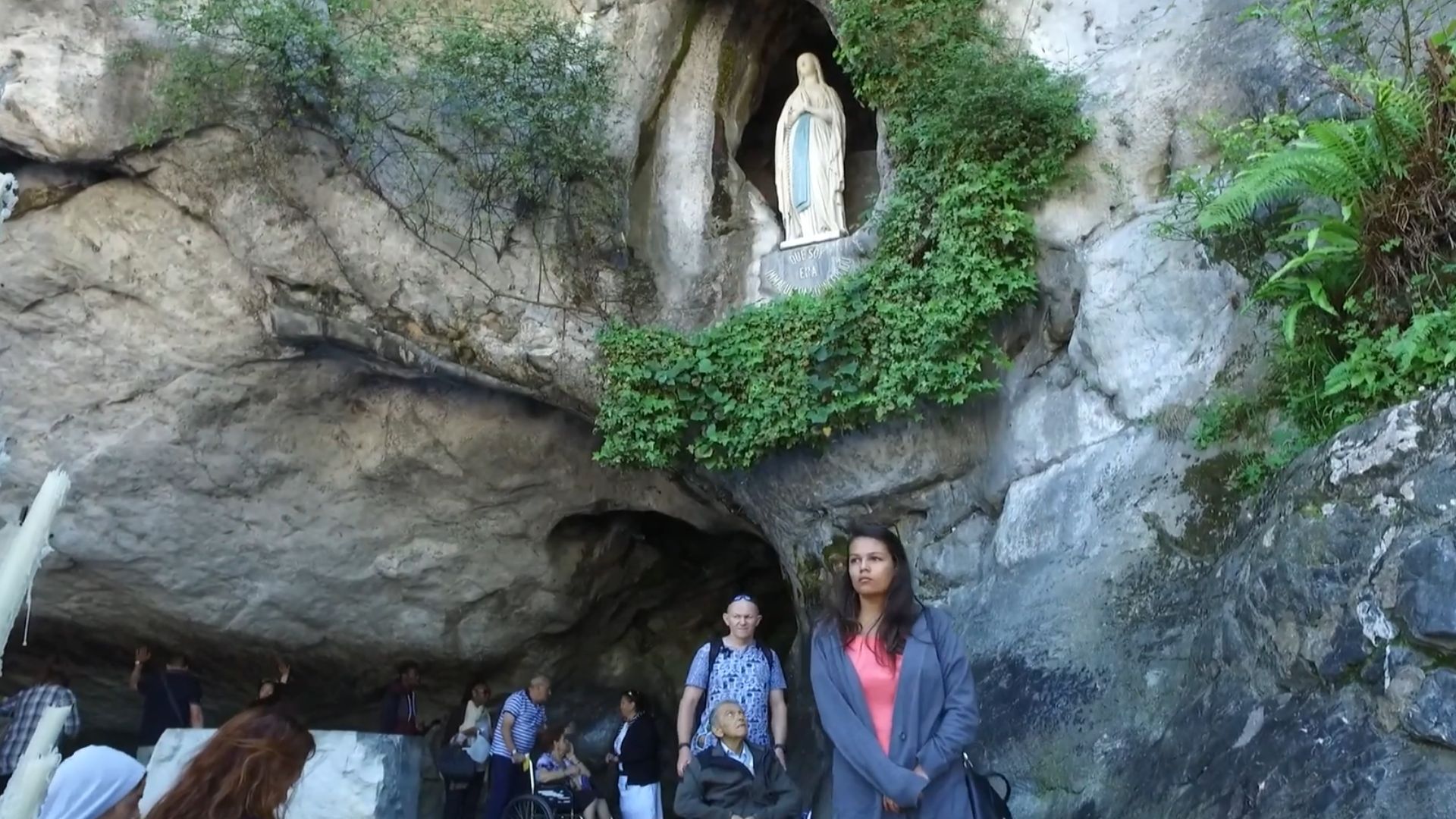
But time would prove the pope right. In 1858, in Lourdes, the Virgin appeared 18 times to Bernadette, an illiterate young woman. When Mary revealed her name to her, it was interpreted as divine confirmation of the dogma.
FRANÇOIS VAYNE
Vatican correspondent
It is important to note that the popes have a very strong connection to Lourdes, because when the Virgin Mary appeared in Lourdes, Pope Pius IX was facing many problems. And the fact that the Virgin Mary revealed her name in Lourdes—”I am the Immaculate Conception”—Pope Pius IX took this as a confirmation of his magisterium.
The apparitions lasted five months. The first one took place on February 11, a date that has since marked important events at the Vatican. Specifically, Pope Paul VI proclaimed St. Benedict the patron saint of Europe in 1964, Pope John Paul II established World Day of the Sick in 1992, and Pope Benedict XIV announced his resignation in 2013.
FRANÇOIS VAYNE
Vatican correspondent
All important diplomatic documents issued by the Holy See are signed on the feast day of Our Lady of Lourdes, February 11—such as the Lateran Pacts, for example, or when Pope John Paul II brought Catholic bishops back to Moscow after the fall of the Wall; that, too, took place on February 11.
The papal connection was also evident in visits. Pope John Paul II visited on two occasions, in 1983 and in 2004, a year before his death.
Pope Benedict XVI took up the torch, visiting in 2008. He went for the 150th anniversary of the apparitions of the Virgin Mary.
His stop in the small town turned the trip into an official visit to France, although the itinerary was more tightly controlled, with less contact with the faithful. The opposite would be true for Leo XIV.
CAMILLE DALMAS
Vatican correspondent, I.MEDIA Agency (France)
Pope Benedict’s trip, many years ago, was much more cautious. Today, it looks like a trip where the Pope will truly be everywhere, in close contact with the people—something that wasn’t the case during Pope Benedict’s trip so many years ago.
Back then, it was more of an institutional event, with little contact with the crowd; they chose a smaller venue for Mass. Here, it’s a massive venue. Right now, we’re talking about 500,000 people for Saturday’s Mass, but there’s room for many more.
France thus becomes the sixth international trip of Pope Leo XIV’s pontificate. Another European destination, historically Catholic, but one where secularization gradually took hold until it uprooted faith from society.