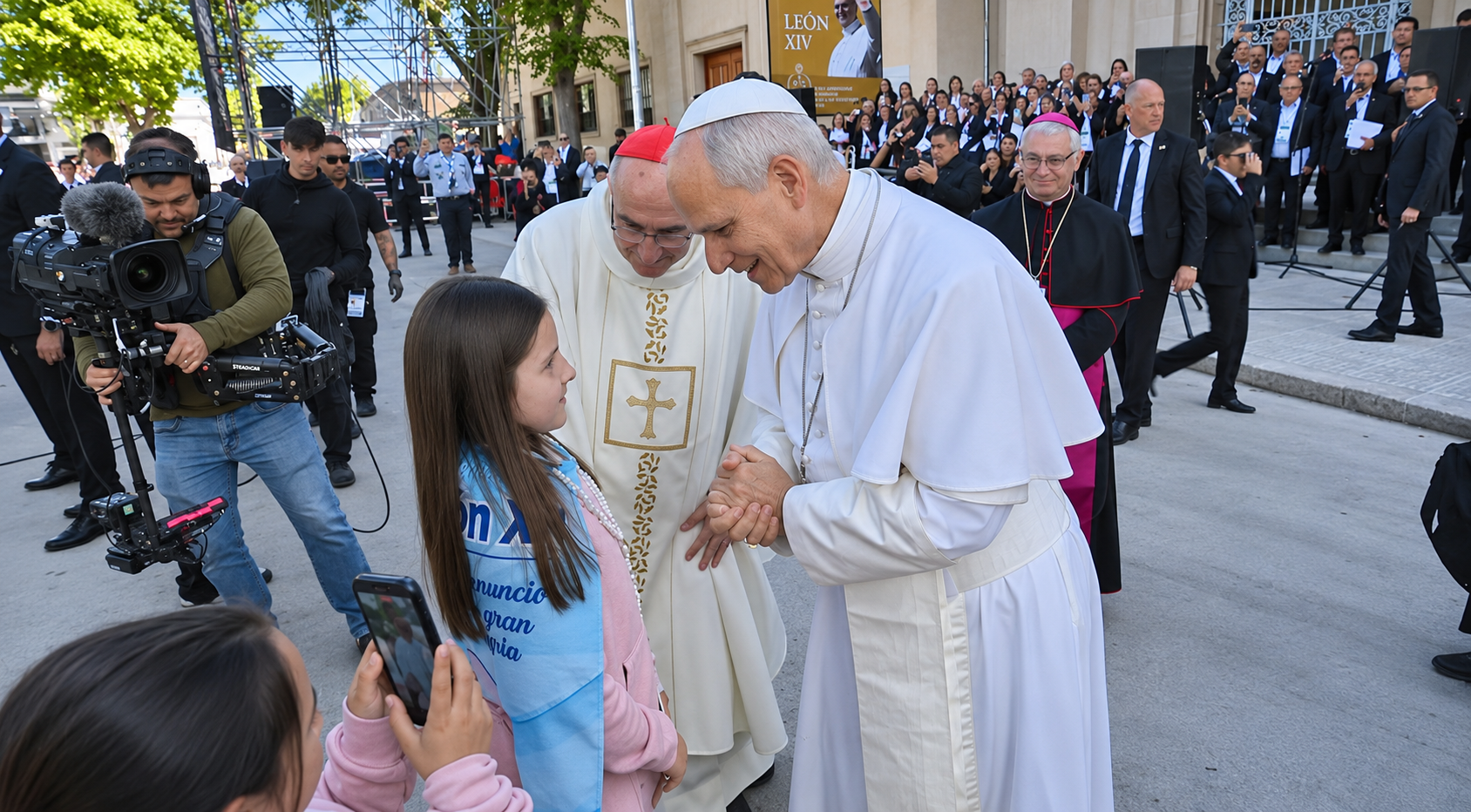
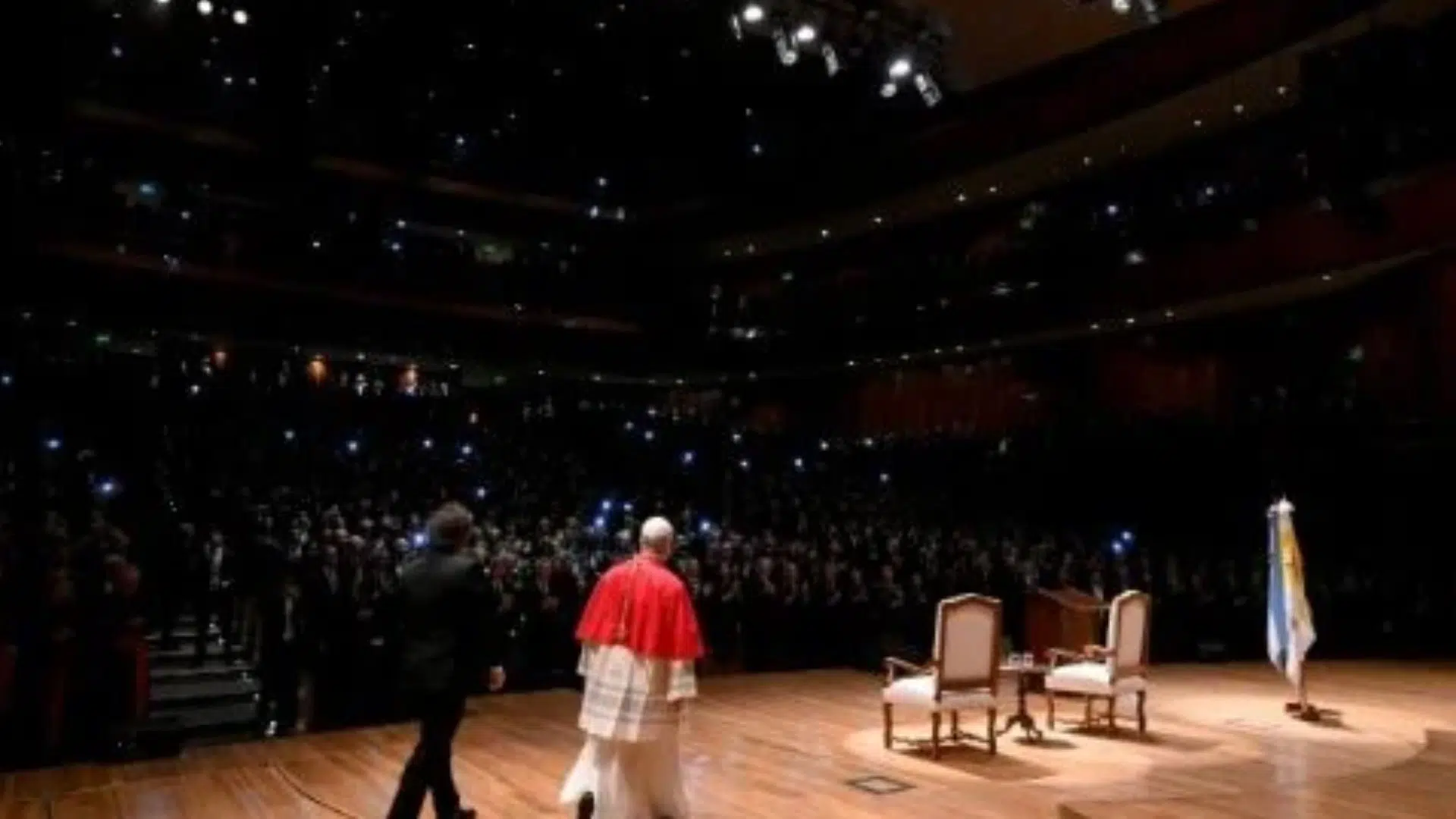
Pope Leo XIV met with representatives from the working world at the Catholic University of Argentina.
In his speech, he said that work should not be a source of conflict and that people should not be judged solely on their efficiency.
POPE LEO XIV
Where the rule of the few is the law, work becomes exploitation of all those in the workforce. Workers are valued solely for their efficiency.
He then reiterated that the economy must serve people, and not the other way around. The pontiff also sought to address one of the major issues of our time: unemployment.
POPE LEO XIV
Depriving a person of work is not simply denying them an income; it is a serious affront to their dignity, nullifying their ability to contribute to society and plunging them into social exclusion, thereby fragmenting the cohesion of society and destroying community action aimed at the common good.
Pope Leo XIV also referred to the principle of the universal destination of goods, which must be safeguarded for future generations.
POPE LEO XIV
Although the Church recognizes and defends the right to private property, this right is always subject to a social obligation: the earth and its fruits have been given by God for the sustenance of all humanity.
The pope didn’t want to overlook the work that many people do, sometimes without pay.
POPE LEO XIV
Let’s also consider the quiet, self-sacrificing work involved in household chores, the unpaid hours spent serving mate cocido to children in the neighborhoods, or the long days spent plowing, cultivating, and harvesting a field.
This is the Church’s view on how governments should act in the interest of society.
POPE LEO XIV
In the tradition of the Church’s social teaching, the state does not have to do everything; rather, its task is to foster the activities of intermediate bodies, families, local authorities, social groups, and movements, while retaining regulatory power for the common good and undertaking the tasks that smaller groups cannot fulfill.
The pope also addressed the automation of certain jobs due to technology or artificial intelligence. He said that it is up to states to ensure that this doesn’t happen and that technology is always subordinate to ethical principles.
On the other hand, the pope sought to highlight the value of entrepreneurs, noting that they risk their capital, though he offered some cautions. For example: avoiding the risk of greed.
POPE LEO XIV
When economic profit is elevated to the sole criterion of success, the company becomes dehumanized and turns into a structure of sin that leads to exclusion.
Among those present at this event were business leaders, labor unions, grassroots movements, and teachers from Argentina.