James O'Reilly
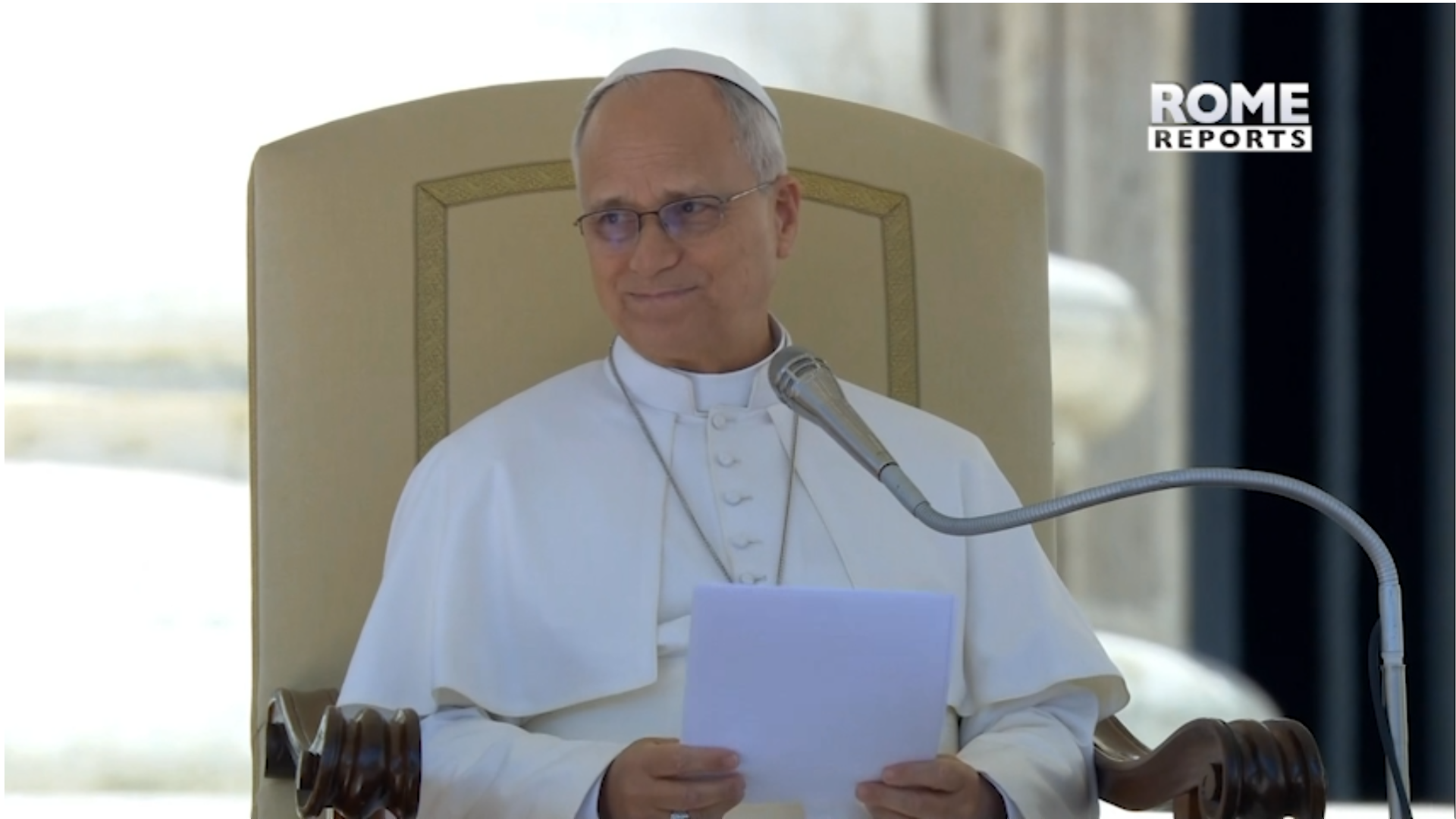
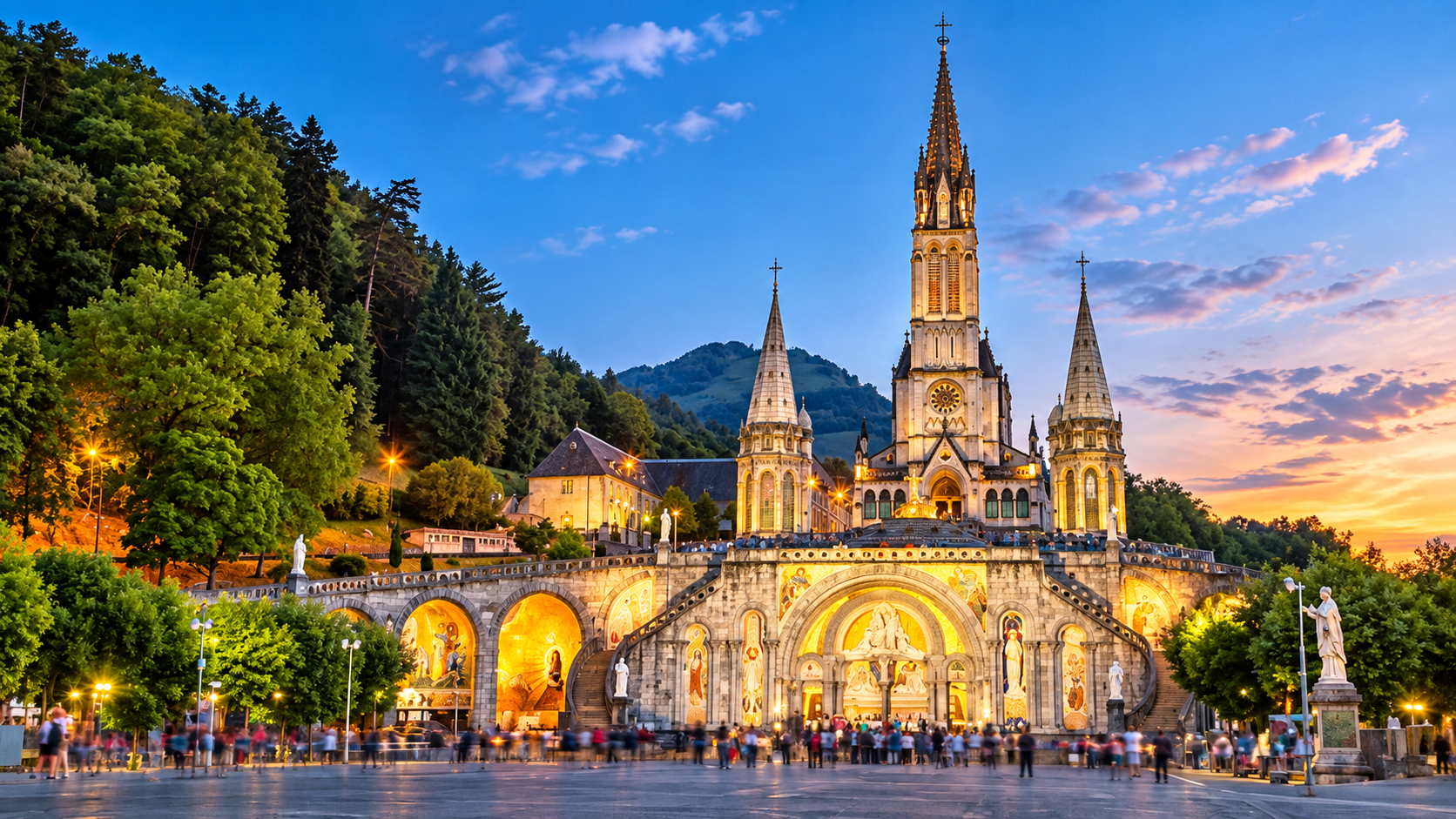
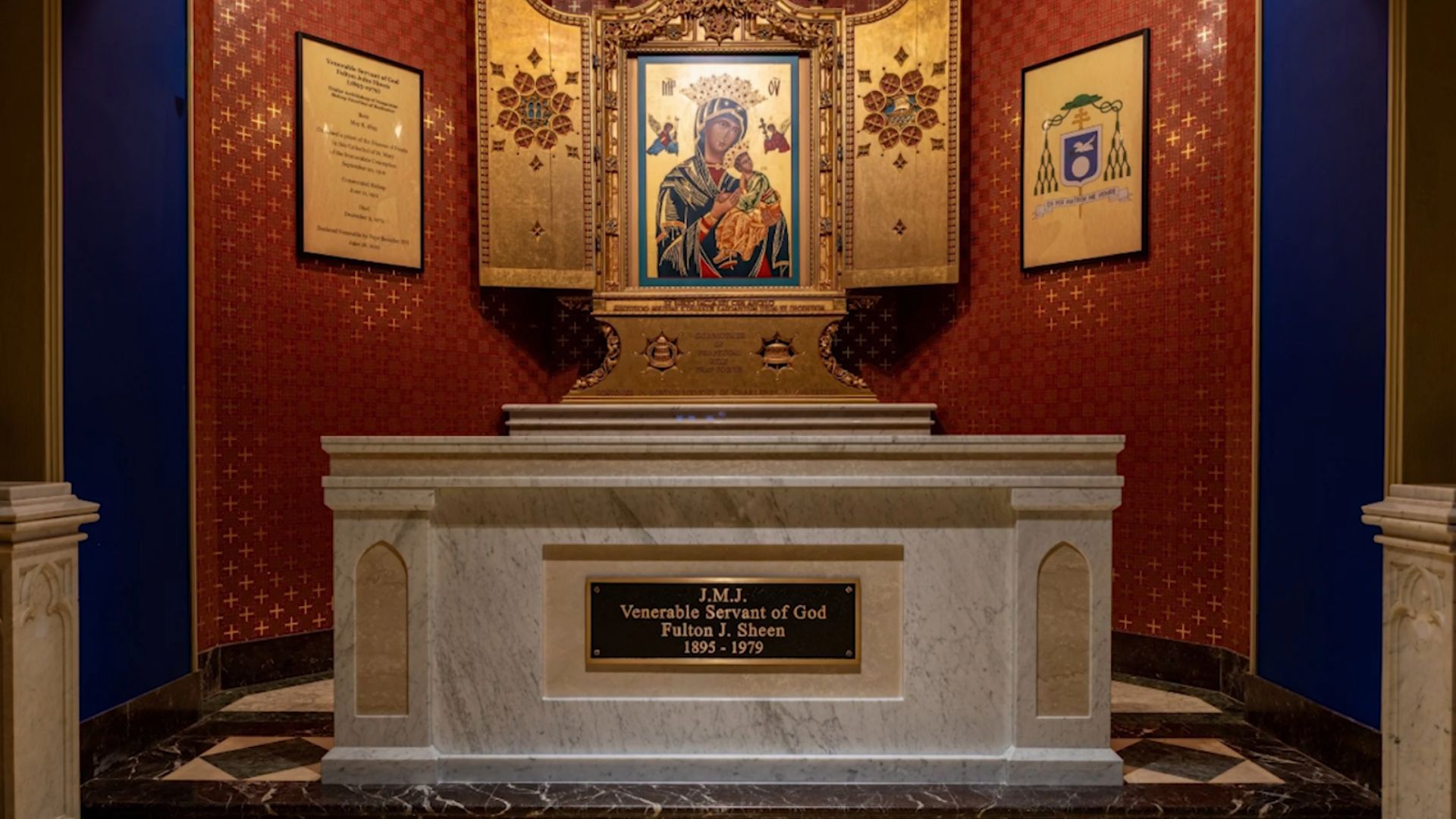
After visiting and praying in the chapel where the remains of Saint Bartolo Longo rest, the Pope celebrated Mass in a crowded square, with around 20,000 faithful who welcomed him with great anticipation on his first arrival in the city of Pompeii.
During the homily, the Pontiff highlighted the spiritual fruits that, for Christians, come from praying the daily Rosary. He also evoked his predecessor Leo XIII, speaking about his devotion to the Rosary.
FULL HOMILY OF LEO XIV:
Dear brothers and sisters!
“My soul magnifies the Lord.” These words, with which we responded to the First Reading, rise from the heart of the Virgin Mary as she presents to Elizabeth the fruit of her womb, Jesus, the Savior. After her, Zechariah, the father of John the Baptist, and the elderly Simeon will also sing of Christ. These three canticles shape every day the Church’s praise in the Liturgy of the Hours. They are the gaze of ancient Israel, which sees its promises fulfilled; they are the gaze of the Bride Church, turned toward her divine Spouse; they are implicitly the gaze of all humanity, which finds an answer to its longing for salvation.
One hundred and fifty years ago, laying the first stone of this Shrine, in the place where the eruption of Vesuvius in 79 AD had buried beneath ash the signs of a great civilization, protecting them for centuries, Saint Bartolo Longo, together with his wife Countess Marianna Farnararo De Fusco, laid the foundations not only of a temple, but of an entire Marian city. In this way he expressed awareness of a divine plan, which Saint John Paul II, speaking in this place of grace on October 7, 2003, at the conclusion of the Year of the Rosary, relaunched for the Third Millennium in the perspective of the new evangelization: “Today,” he said, “as in the times of ancient Pompeii, it is necessary to proclaim Christ to a society that is moving away from Christian values and even loses its memory of them.”
Exactly one year ago, when I was entrusted with the ministry of Successor of Peter, it was precisely the day of the Supplication to the Virgin of the Holy Rosary of Pompeii. I therefore had to come here, to place my service under the protection of the Holy Virgin. Having then chosen the name Leo, I place myself in the footsteps of Leo XIII, who, among other merits, also developed a broad Magisterium on the Holy Rosary. To all this is added the recent canonization of Saint Bartolo Longo, apostle of the Rosary.
This context provides us with a key for reflecting on the Word of God we have just heard. The Gospel of the Annunciation introduces us to the moment in which the Word of God becomes flesh in Mary’s womb. From this womb radiates the Light that gives full meaning to history and to the world. The greeting that the angel Gabriel addresses to the Virgin is an invitation to rejoice: “Rejoice, full of grace” (Lk 1:28; cf. Zeph 3:14). Yes, the Hail Mary is an invitation to joy: it tells Mary, and in her all of us, that upon the ruins of our humanity, wounded by sin and therefore always inclined toward wrongdoing, domination, oppression, and war, there has come the caress of God, the caress of mercy, which takes on a human face in Jesus. Mary thus becomes Mother of Mercy.
A disciple of the Word and instrument of its Incarnation, she truly reveals herself as “full of grace.” Everything in her is grace. Offering her own flesh to the Word, she also becomes, as the Second Vatican Council teaches following Saint Augustine, “Mother of the members (of Christ) … because she cooperated by charity in the birth of believers in the Church, who are members of that Head” (Dogmatic Constitution Lumen gentium, 53; cf. St Augustine, De sancta virginitate, 6).
In Mary’s “Be it done,” not only Jesus is born, but also the Church, and Mary becomes at once Mother of God—Theotokos—and Mother of the Church. A great mystery! Everything takes place in the power of the Holy Spirit, who overshadows Mary and makes her virginal womb fruitful. This moment in history has a sweetness and power that attract the heart and raise it to that contemplative height where the prayer of the Holy Rosary germinates.
A prayer that, born and gradually developed in the second millennium, is rooted in salvation history, and precisely in the Angel’s greeting to the Virgin it finds its prelude. “Hail Mary!” The repetition of this prayer in the Rosary is like an echo of Gabriel’s greeting, an echo that crosses the centuries and directs the believer’s gaze toward Jesus, seen with the eyes and heart of the Mother. Jesus adored, contemplated, and assimilated in each of his mysteries, so that with Saint Paul we may say: “It is no longer I who live, but Christ who lives in me” (Gal 2:19).
Preceded by the proclamation of the Word of God, placed between the Our Father and the Glory Be, the Hail Mary repeated in the Holy Rosary is an act of love. Is it not characteristic of love to repeat without tiring: “I love you”? An act of love which, on the beads of the rosary—clearly seen in the Marian image of this Shrine—leads us up to Jesus and brings us to the Eucharist, “the source and summit of the Christian life” (Lumen gentium, 11).
Saint Bartolo Longo was convinced of this when he wrote: “The Eucharist is the living Rosary, and all the mysteries are found in the Holy Sacrament in an active and vital form” (The Rosary and the New Pompeii, 1914, p. 86). He was right. In the Eucharist, the mysteries of Christ’s life are all, so to speak, concentrated in the memorial of his sacrifice and in his real presence.
The Rosary has a Marian character, but a Christological and Eucharistic heart (cf. Apostolic Letter Rosarium Virginis Mariae, 1). If the Liturgy of the Hours marks the times of the Church’s praise, the Rosary marks the rhythm of our life, continually bringing it back to Jesus and to the Eucharist.
Generations of believers have been shaped and preserved by this simple and popular prayer, yet one capable of mystical heights and a treasury of the most essential Christian theology. What is more essential, in fact, than the mysteries of Christ, his holy Name, pronounced with the tenderness of the Virgin Mother? It is in this Name, and in no other, that we can be saved (cf. Acts 4:12).
By repeating it in each Hail Mary, we in some way experience the home of Nazareth, as if hearing again the voice of Mary and Joseph during the long years in which Jesus lived with them. We also experience the Upper Room, where the Apostles with Mary awaited the outpouring of the Holy Spirit.
This is what the First Reading pointed us toward. How can we not think that, in that time between the Ascension and Pentecost, Mary and the Apostles would compete in recalling the different moments of Jesus’ life? No detail could be forgotten. Everything had to be remembered, assimilated, imitated.
Thus is born the contemplative journey of the Church, of which the Rosary, in analogy with the liturgical year, offers a synthesis in the daily meditation of the holy Mysteries. Rightly, the Rosary has been considered a compendium of the Gospel, which Saint John Paul II wished to enrich with the Mysteries of Light.
This dimension was also very vivid in Saint Bartolo Longo, who offered pilgrims profound meditations to save the Holy Rosary from the risk of mechanical recitation and to ensure for it the biblical, Christological, and contemplative depth it must have.
Brothers and sisters, if the Rosary is prayed and, I would even say, “celebrated” in this way, it is also, as a natural consequence, a source of charity. Charity toward God, charity toward neighbor: two sides of the same coin, as the Second Reading from the First Letter of Saint John reminds us, concluding: “Let us love not in word or speech, but in deed and truth” (1 Jn 3:18).
Therefore Saint Bartolo Longo was both apostle of the Rosary and apostle of charity. In this Marian City he welcomed orphans and children of prisoners, showing the regenerating power of love. Here even today, the smallest and weakest are welcomed and cared for in the works of the Shrine.
The Rosary turns the gaze toward the needs of the world, as the Apostolic Letter Rosarium Virginis Mariae emphasized, highlighting especially two urgent intentions that remain highly relevant: the family, weakened in its marital bonds, and peace, threatened by international tensions and by an economy that prefers the trade of weapons over respect for human life.
When Saint John Paul II instituted the Year of the Rosary—next year will mark a quarter of a century—he placed it in a special way under the gaze of the Virgin of Pompeii. Since then, the times have not improved. The wars still being fought in many regions of the world call for a renewed commitment not only economic and political, but also spiritual and religious. Peace is born in the heart.
The same Pontiff, in October 1986, gathered leaders of major religions in Assisi, inviting all to pray for peace. On several recent occasions, both Pope Francis and I have asked the faithful throughout the world to pray for this intention. We cannot resign ourselves to the images of death that the news presents to us every day.
From this Shrine—whose façade Saint Bartolo Longo conceived as a monument to peace—we now raise our Supplication in faith. Jesus told us that prayer made with faith can obtain everything (cf. Mt 21:22). And Saint Bartolo Longo, reflecting on Mary’s faith, calls her “omnipotent by grace.”
Through her intercession, may an overflowing outpouring of mercy come from the God of peace, touching hearts, calming resentments and fratricidal hatred, and enlightening those who hold special responsibilities of government.
Brothers and sisters, no earthly power will save the world, but only the divine power of love, which Jesus the Lord has revealed and given to us. Let us believe in Him, hope in Him, and follow Him!