James O'Reilly
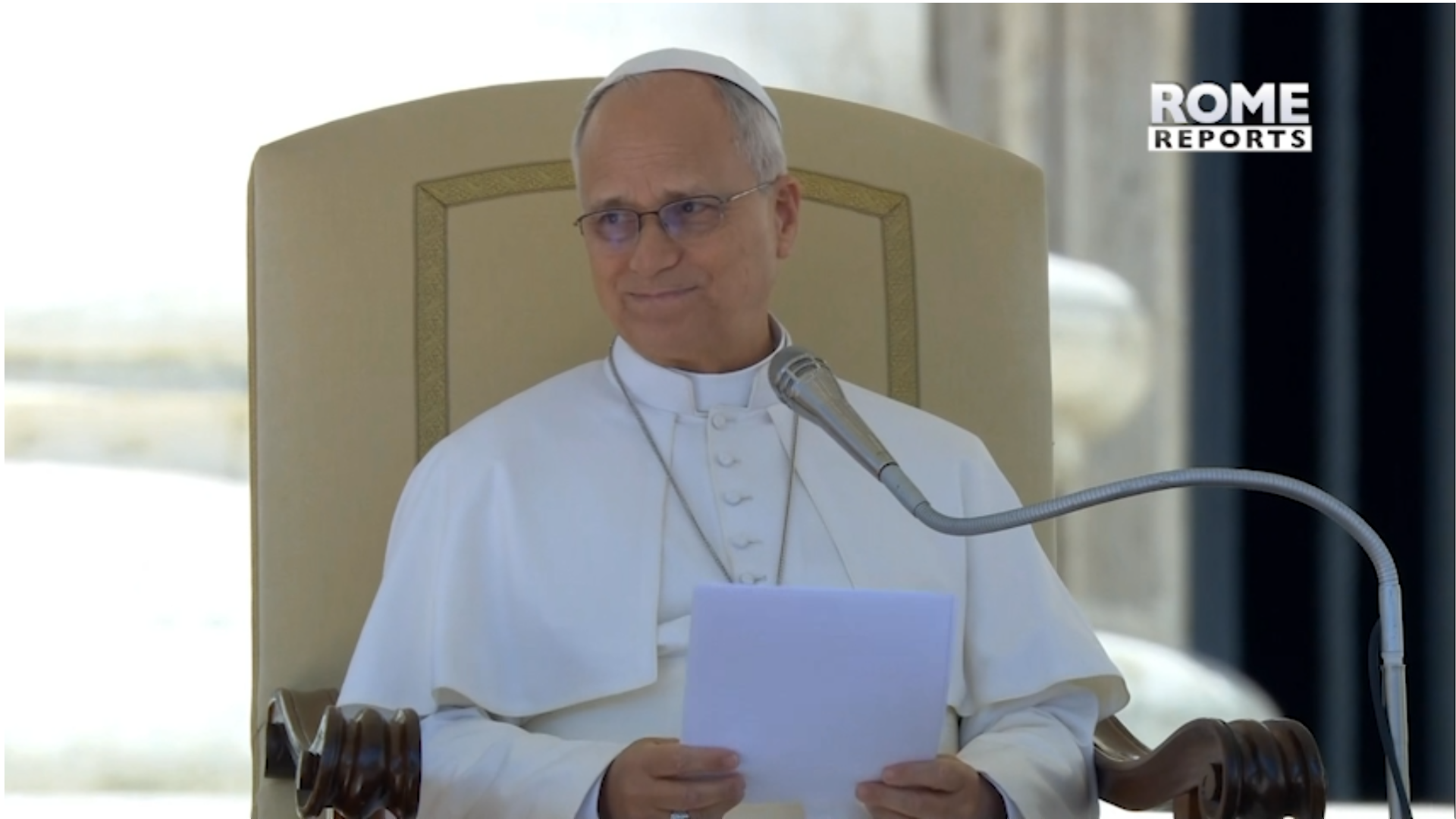
At the end of the meeting with the clergy and consecrated persons at the Naples Cathedral, Pope Leo XIV traveled by car to Piazza del Plebiscito for a meeting with thousands of citizens of the city.
Upon his arrival, the pope greeted the community of the Fathers of the Order of Minims and some of the authorities present at the Basilica of San Francesco di Paola. Then, before 20,000 faithful, Pope Leo spoke to the difficulties and inequalities faced by the city of Naples.
FULL SPEECH OF POPE LEO XIV
Brothers and sisters, thank you for your warm welcome!
I thank the Mayor for the words he has addressed to me, and I greet all the civil and military authorities present, while renewing my gratitude to the Archbishop and to all of you who have gathered here.
Against the background of the Gospel scene of the disciples of Emmaus, several voices have alternated to introduce this encounter of ours. They are the voices of Naples, a pearl of the Mediterranean watched from above by Vesuvius—voices in which the ancient beauty of this city, washed by the sea and kissed by the sun, resounds, but in which wounds, poverty, and fears also find space. These voices speak of a Naples that often walks tired, disoriented, and disappointed like the two disciples in the Gospel, and that needs the closeness offered to them by Jesus; voices of a people who, even today, feel the need to stop and ask themselves: what really matters?
Brothers and sisters, in this city there flows a longing for life, justice, and goodness that cannot be overcome by evil, discouragement, or resignation. For this reason it is necessary that—together, not alone—we ask ourselves: what really matters? What is necessary and important in order to resume the journey with the momentum of commitment rather than the fatigue of indifference, with the courage of good rather than the fear of evil, with care for wounds rather than indifference?
Naples today lives a dramatic paradox: alongside a remarkable growth in tourism, it struggles to match an economic dynamism capable of truly involving the entire social community. The city remains marked by a social divide that no longer separates centre from peripheries, but is even present within each area, with existential peripheries hidden even in the heart of the historic centre.
In many areas there is a true geography of inequality and poverty, fed by long-unresolved problems: income disparity, scarce job prospects, lack of adequate structures and services, the pervasive action of criminality, the drama of unemployment, school dropout rates, and other situations that weigh heavily on people’s lives. Faced with these realities, which at times take on worrying dimensions, the presence and action of the State is more necessary than ever, to give citizens security and trust and to remove space from organised crime.
In this context, many Neapolitans nurture the desire for a city redeemed from evil and healed of its wounds. Often these are true social heroes, women and men who work every day with dedication, sometimes simply by faithfully carrying out their duty without seeking visibility, so that justice, truth, and beauty may make their way through the streets, institutions, and relationships. These people must not remain isolated, and for their commitment to permeate the deepest fabric of the city, there is a need to create connections, to work in networks, to build community.
I am glad to be able to say that the Church in Naples is a “binding agent” that greatly contributes to this network-building work, bringing together individual efforts and connecting the energies, talents, and aspirations of many. It has done so by promoting an Educational Pact, which has received a generous response from institutions—the Municipality, the Region, the Government—and also from many ecclesial and third-sector organisations.
Therefore, I would like to issue an appeal to all of you: do not break this network that unites you, do not extinguish this light you have begun to light in the darkness, do not let this dream you are building for a better and more beautiful Naples lose its colour. Continue to carry forward this Pact, gather your forces, work together, walk united—institutions, Church, and civil society—to lift up the city, protect your children from the dangers of hardship and evil, and restore to Naples its calling to be a capital of humanity and hope.
I also wish to recall the path undertaken by this city to rediscover its millennial vocation: to be a natural bridge between the shores of the Mediterranean. Naples must not remain a simple “postcard” for visitors, but must become an open construction site where a concrete peace is built, one that can be verified in people’s daily lives.
Peace begins in the human heart, passes through relationships, takes root in neighbourhoods and suburbs, and expands to embrace the entire city and the world. For this reason, we feel it is urgent to work first and foremost within the city itself. Here peace is built by promoting a culture that is an alternative to violence, through daily gestures, educational paths, and practical choices of justice.
We know that there is no peace without justice, and that justice, to be authentic, can never be separated from charity. It is in this perspective that experiences such as the House of Peace, which welcomes children and mothers in difficulty, and Casa Bartimeo, a place of accompaniment for young people and adults in fragile situations, are born and developed: concrete signs of a peace that becomes hospitality, care, and opportunity for redemption.
Moreover, together—ecclesial community and civil society—you are working to make Naples a “platform” of intercultural and interreligious dialogue. Through conferences, international awards, and reception pathways, including for young people from conflict contexts such as Gaza, you can continue to give voice, from the ground up, to a culture of peace, countering the logic of confrontation and the use of weapons as a supposed solution to conflict.
In this sense, Naples continues to reveal its deep heart in the reception of migrants and refugees, lived not as an emergency but as an opportunity for encounter and mutual enrichment. And this is possible above all thanks to the work of the diocesan Caritas, which has also transformed the Port of Naples from a simple point of arrival into a living sign of welcome, integration, and hope.
Brothers and sisters, Naples needs this surge, this overwhelming energy of good, the evangelical courage that makes us capable of renewing all things. Let it be a commitment for everyone: take it up and carry it forward together! Do so especially with young people, who are not only recipients but protagonists of change. It is not only a matter of involving them, but of recognising in them space, trust, and responsibility, so that they can contribute creatively to building the common good.
In a reality often marked by distrust and lack of opportunity, young people represent a living and surprising resource. This is shown by the experience of the “Diffuse Diocesan Museum,” where many of them are committed to preserving and narrating the cultural and spiritual heritage of the city with new and accessible languages. It is shown by young people who, in oratories, dedicate themselves passionately to the education of younger children, becoming credible points of reference and witnesses of healthy relationships. It is also shown by the many volunteers engaged in charitable services, social initiatives, and accompaniment of vulnerability.
These experiences are not marginal: they are already concrete signs of a young Church and of a city that can regenerate itself. I am certain that you will continue to cultivate them with courage, passion, and enthusiasm that distinguish you.
I thank you, dear friends, for your welcome and entrust you all to the intercession of the Blessed Virgin Mary and Saint Januarius. May the Lord keep you always faithful to the Gospel and bless the city of Naples!