Daniel del Castillo González
Christopher Nolan’s The Odyssey is making waves on the big screen. As audiences rediscover the journey of Odysseus, the Church is looking at the epic as more than just a literary classic.
John Paul II, Benedict XVI, and Pope Francis each saw something deeper in Homer’s work than the return of a hero: the story of a man searching for the meaning of his life.
FR. RENATO BUTERA, SDB
Professor of Film, Salesian University, Rome
It’s a story from which we can draw countless insights for Christian life. Christianity,the Gospel, leads you and urges you to value what is human in every person, in each and every one, and to bring that out to its fullest potential. In Nolan’s film, in Nolan’s Odyssey, there are so many moments that do just that; they offer a very secular reinterpretation, yet they provide insights into what might be called a Christianity that has been, so to speak, attained, achieved, and matured.
In 1985, John Paul II wrote that the great questions raised by The Odyssey, who man is, where he comes from, and where he is going, come from a desire for truth that runs throughout history.
Benedict XVI noted that the word evangelium, meaning “good news,” already appears in Homer as an announcement of something good.
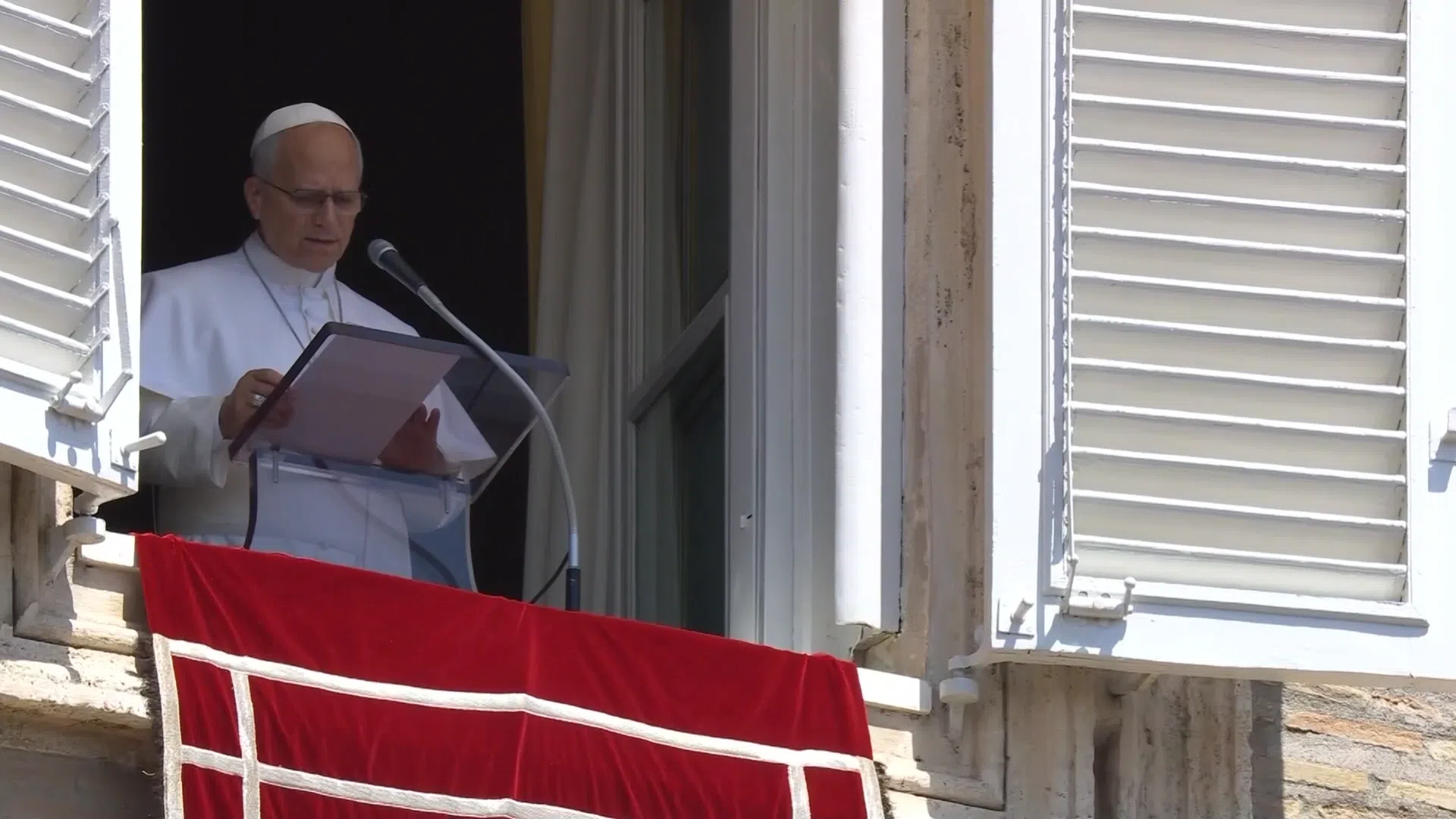
And Pope Francis connected today's migration tragedies with the Greek epic, describing those in need as the protagonists of a terrible modern odyssey.
POPE FRANCIS
2021
I like to recall that when Odysseus landed in Ithaca, he was not recognized by the local rulers, who had usurped his home and possessions, but by those who had cared for him. His nurse recognized him by his scars.
Christopher Nolan now takes that insight and brings it to the big screen. His Ulysses continues to face monsters and shipwrecks, but the real battle takes place within man.
FR. RENATO BUTERA, SDB
Professor of Film, Salesian University, Rome
There may be an interpretation of Homer’s work,and of Homer himself,that I would almost call proto-Christian, proto-theological. It is clear that Homer did not know and was not, so to speak, very far removed from the time when Christ would proclaim his Gospel; however, it is also true that in his songs, whether dictated or written… Historical and archaeological research suggests that he was blind and could not write, so he sang them,or rather, chanted them, and in those chants there may have been the seeds of values that we later find in Christianity.
The return to Ithaca becomes a journey toward mercy, repentance, and the possibility of starting over.
FR. RENATO BUTERA, SDB
Professor of Film, Salesian University, Rome
Above all, the character of Odysseus, or Ulysses, and, along with him, certain figures who accompany him in a special way, I’m thinking, for example, of Penelope herself or his son Telemachus, embody these values. Values such as sacrifice, selflessness, honesty in life, and ethical living—which, in Nolan’s reinterpretation, clearly draw on elements of contemporary Western culture that are deeply rooted in Christianity.
Nearly 3,000 years after Homer imagined Odysseus’ return to Ithaca, his journey continues to speak to the human experience. For the Church, the journey has never been only a voyage across the sea, but also an inner journey.