James O'Reilly
St. Catherine of Siena broke all the apparent molds of a 14th-century woman. Of humble origin and without formal academic education, she unified the papacy, served as an ambassador, was a mystic, and became a patron saint of Europe.
RICARDO DE LUIS CARBALLADA, O.P.
Dominican priest of San Esteban
From a very young age, she felt the call of Jesus Christ and decided to consecrate herself to Him. Very young, around the age of 20, she had a mystical vision of Jesus Christ and entered into a mystical marriage with Him—that is, she chose to dedicate herself exclusively to Jesus, to live united with Him.
During her lifetime in the 14th Century, the popes left Rome to reside in the French city of Avignon. But moved by mystical visions, St. Catherine believed that this exile weakened the Church and fueled war in Italy. So she made this decision…
RICARDO DE LUIS CARBALLADA, O.P.
Dominican priest of San Esteban
From that love for Jesus Christ, she wrote to the Pope and insisted above all on this: that it was a scandal for the whole Church to have two papal seats, that the Church was not one, that we were not living the communion that Jesus Christ desired.
And she did not limit herself to letters. She even traveled to Avignon in 1376 to meet Pope Gregory XI face to face to convince him to return to Rome. She also moved to the Eternal City for the remainder of her life.
RICARDO DE LUIS CARBALLADA, O.P.
Dominican priest of San Esteban
And she died in Rome with very deteriorated health, the result of her fasting and ascetic life, and she would go, as she did at the end of her life every day, to pray for the Church at the tomb of the Apostle Saint Peter.
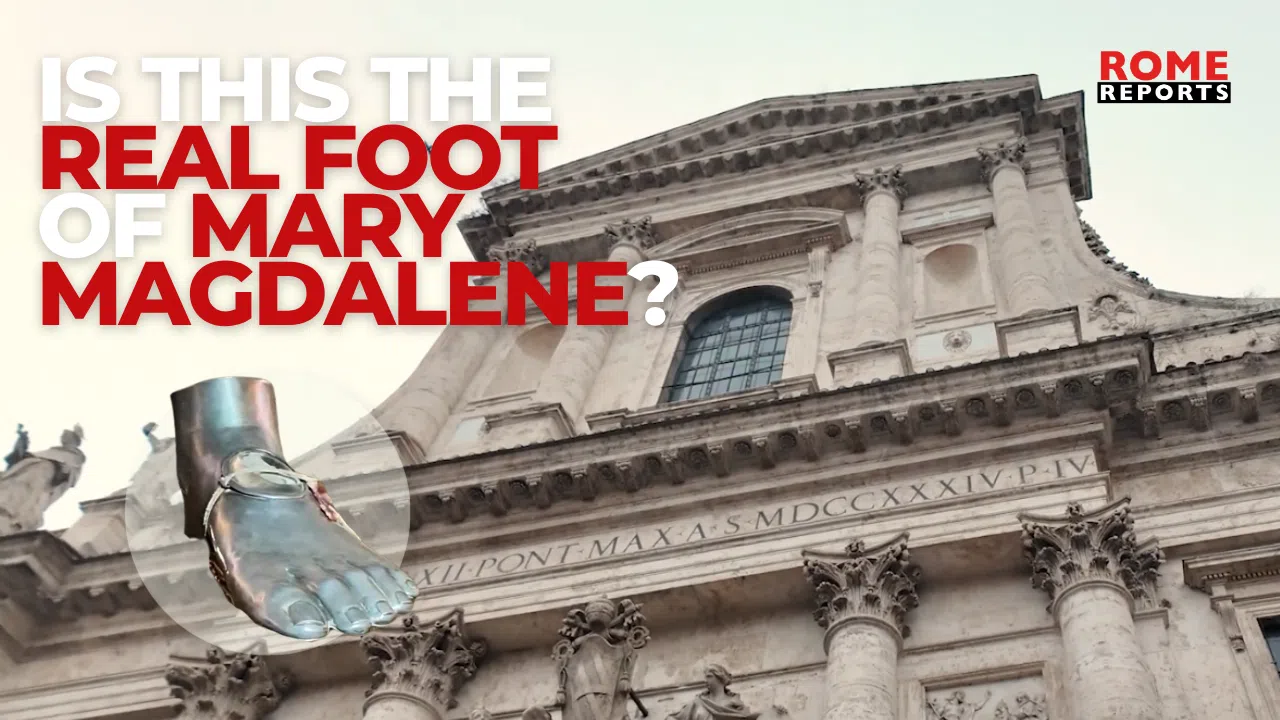
St. Catherine was canonized in 1461. Today, her relics are spread across Italy. In Siena, there are several—such as her head and her thumb—which are kept in the Basilica of St. Dominic.