Carmen Álvarez Cuadrado
What was Paris in the 1900s like? France began the 20th century in an environment that was increasingly hostile to the Church. They wanted to establish themselves as a model of a secular state at the forefront of Europe, and the laws, both national or local, were meant to support that goal.
In less than a decade, the Third Republic took radical measures: it severed ties with the Vatican, banned processions, closed more than 3,000 Catholic schools, confiscated Church property, and banned religious instruction even in private settings.
One of the most radical laws was the one requiring religious orders to obtain state authorization to exist. However, there was a catch: the government denied nearly all applications, forcing more than 30,000 members of religious orders into exile.
FRANÇOIS VAYNE, French Vaticanist
When secular France, under a fanatically secular government, sought to prevent the Catholic community from expressing its faith—when they expelled all religious congregations at the beginning of the 20th century—Lourdes became a place where faith could be expressed freely; processions and all the things that were forbidden in other cities could be done in Lourdes.
While the country was becoming anticlerical, Lourdes held its ground. The Virgin Mary’s apparitions to the young Bernadette in 1858 turned this small village in the Pyrenees into a true mass phenomenon.
Fifty years later, in 1908, Lourdes was already welcoming one million pilgrims a year. In a France subjugated by atheism, this place became an oasis for French Catholics.
FRANÇOIS VAYNE, French Vaticanist
The flame of the Catholic faith has withstood French secularism in Lourdes itself, and it is extremely important to point this out because, without Lourdes, many French Catholics would not have been able to find the source to nourish their faith and hope through this very luminous apparition
But this resistance went further. France had exchanged faith in God for faith in science. In Lourdes, however, the opposite was true: inexplicable healings were taking place, which doctors attributed to a divine power. Since 1858, there have been 72 officially recognized miracles, although there are more than 7,000 documented cases.
Another reason is financial. Lourdes is a major independent economic driver and a source of employment for thousands of secular families. These permanent jobs are in addition to the more than 20,000 annual volunteers. Together, they welcome more than 5 million pilgrims each year.
Despite the consolidation of the secular state, something is changing in French society. There has been a surge in conversions, with thousands of adult baptisms in recent years.
CAMILLE DALMAS, Vaticanist, I.MEDIA AGENCY (Francia)
There is something new when talking about France—the country of the Revolution, of militant atheism, a country that, over the last two centuries, has actually done more to destroy the Church than to help it—even though there have been great saints who, in their own way, have also helped the Church? But we know that it is a land where there have been martyrs for the faith.
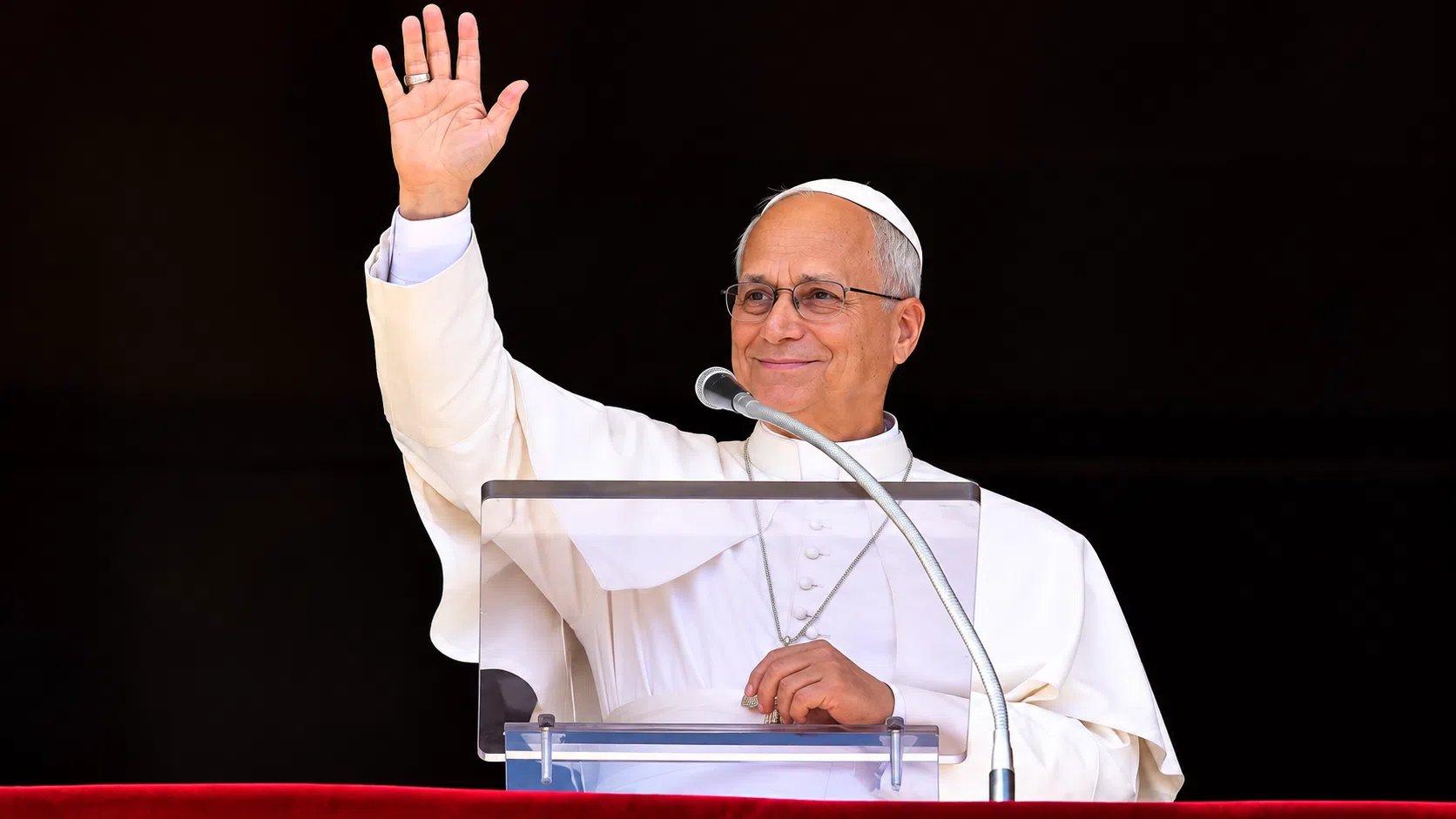
At the time, Lourdes emerged as a symbol of resistance against a France obsessed with secularism. A century later, Pope Leo XIV travels there to offer encouragement and remind Catholics that the country’s Catholic roots, despite everything, are still alive.